The Living Archive: How Working Austin Artists Are Building Their Own Legacies in Real Time

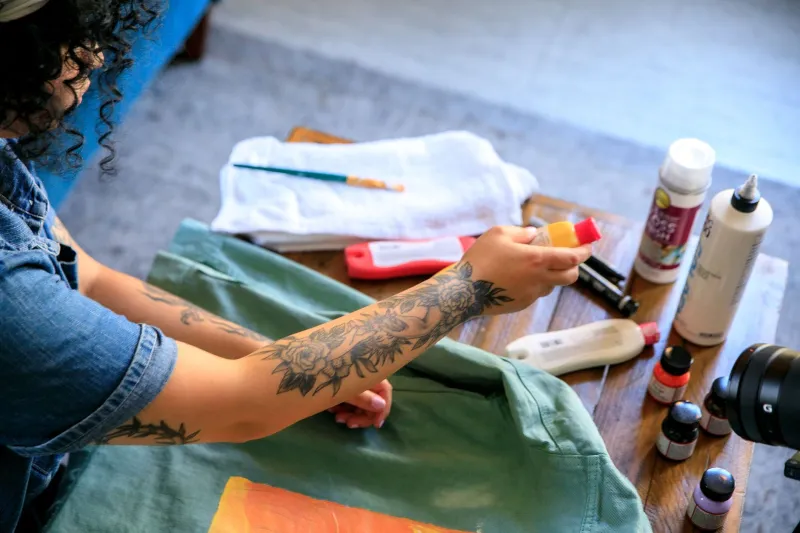
Photo by Photo by Dillon Wanner on Unsplash on Unsplash
The conventional understanding of an artist's archive situates it firmly in the past tense. Archives are assembled after the fact—by estates, by institutions, by scholars working to reconstruct a creative life that has already reached some form of completion. They are, by their nature, retrospective: they look backward at a body of work whose contours have been defined by time and critical reception.
A number of working artists in Austin are refusing that logic. Rather than leaving the archival work to posterity, they are doing it themselves, now, in the midst of active careers that have not yet attracted the institutional attention that typically triggers systematic documentation. They are building personal museums before anyone has suggested they deserve one.
The results of this practice—meticulous digital catalogues, condition reports written for works still hanging in the studio, provenance records maintained from the moment of completion, self-authored curatorial statements framing bodies of work that are still in progress—constitute something genuinely novel in the ecosystem of contemporary art. They represent a form of self-regard that is neither arrogance nor mere marketing strategy, but something more considered: an argument, made through sustained archival labor, that the work matters and that its history is worth preserving.
The Mechanics of Self-Archiving
The specific practices that fall under the heading of self-archiving vary considerably depending on the artist's medium, temperament, and resources. At the most basic level, systematic self-archiving involves maintaining a comprehensive catalogue of all completed works—not merely a price list or a portfolio selection, but a full record that includes dimensions, materials, dates of completion, exhibition history, and current location or ownership status.
For many Austin artists, this cataloguing work begins with a reckoning: the discovery that years of completed work exist only in fragmentary documentation, scattered across hard drives, social media archives, and memory. Reconstructing that record retroactively is laborious and often incomplete. The artists who have committed most seriously to archival practice describe the decision to begin cataloguing prospectively—from this work forward—as a turning point in how they understand their relationship to their own output.
Beyond the basic catalogue, more ambitious self-archiving programs incorporate condition documentation (photographs taken at regular intervals to record the physical state of significant works), written statements that contextualize individual pieces within broader thematic or developmental narratives, and in some cases, oral history recordings in which the artist speaks at length about specific works or periods in their practice.
Digital infrastructure plays a central role. Several Austin artists have developed sophisticated database systems—some built on commercial collection management platforms designed for institutional use, others assembled from more accessible tools—that allow them to search, sort, and present their archive with a precision that rivals the documentation standards of mid-sized galleries and regional museums.
Credibility Before the Credential
The market implications of this kind of self-documentation are significant, and they operate on multiple levels. Most directly, a well-maintained archive signals to collectors and institutions that an artist takes their own work seriously enough to treat it as a matter of record. In a field where the absence of documentation can raise questions about an artist's professional seriousness, the presence of a comprehensive, well-organized archive functions as a form of credibility that does not depend on external validation.
This matters particularly for artists who are still building their market presence and do not yet have the gallery relationships or institutional exhibition history that traditionally serve as proxies for professional standing. An archive can, in some circumstances, substitute for that external endorsement—demonstrating through its own rigor that the artist has already done the work of treating their practice as significant.
For collectors, an artist's archive offers something that a gallery presentation typically cannot: access to the full scope of a creative life, including works that were never exhibited, periods that were subsequently revised or abandoned, and the developmental logic that connects one body of work to the next. Collectors who have engaged with artist-maintained archives describe the experience as transformative—a shift from understanding an artist through the curated selection of a gallery program to understanding them through the comprehensive evidence of their own record-keeping.
The Curatorial Self
Perhaps the most philosophically interesting dimension of this practice is the curatorial dimension—the ways in which artists who archive their own work are simultaneously positioning themselves as interpreters of that work. To write a curatorial statement for a body of work you have just completed is to occupy two roles at once: the maker and the critic, the practitioner and the historian.
This dual occupation is not without its tensions. The critical distance that institutional archivists and art historians bring to their work is, in part, a function of temporal remove—the ability to see a career whole, from outside the pressures and investments of its active unfolding. An artist archiving their own work in real time cannot fully replicate that distance. Their interpretive framing is inevitably shaped by their current concerns, their present understanding of what their work is doing and why.
Some Austin artists engaged in self-archiving acknowledge this limitation directly, treating their curatorial statements not as definitive interpretations but as time-stamped documents—records of how they understood their work at a specific moment, which will themselves become part of the archive as understanding evolves. This recursive quality, in which the documentation of the work becomes part of the work's history, is one of the more conceptually interesting features of the practice.
Legacy as Present-Tense Practice
Underlying all of this is a particular stance toward legacy—one that refuses the conventional narrative in which an artist's significance is established retrospectively, by others, after the fact. The Austin artists building archives of their own work are not waiting to be recognized before they begin treating their practice as historically significant. They are asserting that significance through the act of preservation itself.
This is, in one sense, a deeply pragmatic response to the realities of the contemporary art market, in which institutional recognition is neither guaranteed nor timely, and in which the absence of documentation can cause work to simply disappear from the record. An artist who maintains their own archive protects against that disappearance, regardless of whether external recognition ever arrives.
But it is also something more than pragmatism. It reflects a conviction—held with varying degrees of explicitness by the artists engaged in this practice—that the value of creative work is not contingent on its reception, and that the labor of making deserves to be honored through the labor of preservation. To build an archive before you are famous is, in this reading, not an act of presumption but an act of respect: for the work, for the process, and for the possibility that what matters most about an artist's practice may not be the recognition it eventually receives, but the seriousness with which it was pursued.