Walls That Speak: Austin's Public Art Revolution and the Artists Redefining Urban Space
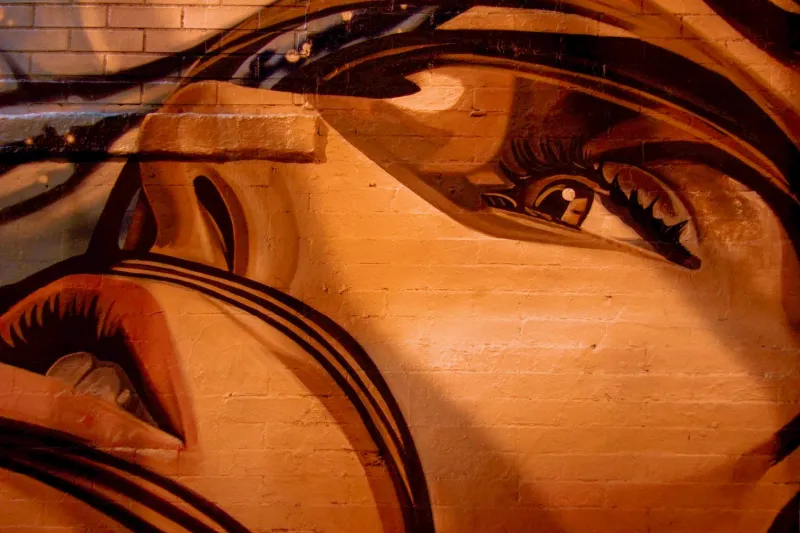
There is a particular moment — one that many Austin residents have experienced without fully registering it — when you round a corner on East Sixth Street or cut through an alley off South Congress Avenue and find yourself standing before something that stops you entirely. Not a gallery wall, not a museum installation, but a mural so expansive and so deliberate in its composition that it demands the same quiet attention you might give a painting in a white-walled room. That moment is not accidental. It is the product of years of sustained creative effort by a community of artists who have decided, collectively and individually, that the city itself is their most important exhibition space.
Austin's public art movement has entered a new phase — one defined less by spontaneous expression and more by a sophisticated interplay between artistic intention, community dialogue, and institutional navigation. The artists driving this shift are not abandoning their studios. Rather, they are expanding the definition of what a studio practice can encompass.
Beyond the Gallery Wall
For many Austin-based artists, the decision to work in public space begins with a fundamental question about audience. Gallery representation remains a meaningful benchmark in the professional art world, but it also carries inherent limitations — the gatekeeping of admission, the self-selection of visitors, the physical and psychological distance between artwork and everyday life. Public muralism dismantles those barriers entirely.
Consider the transformation of the Chestnut neighborhood, where several large-scale works commissioned through Austin's Art in Public Places program have altered the visual identity of entire blocks. These are not decorative afterthoughts applied to blank surfaces. They are site-specific, research-intensive works that respond directly to the histories, demographics, and lived experiences of the communities surrounding them. Artists spend weeks — sometimes months — in conversation with residents before a single mark is made.
This process reflects a broader shift in how contemporary artists understand their role within the urban fabric. The mural is no longer simply an image. It is a record of a conversation.
The Regulatory Landscape: Permission, Legitimacy, and the Gray Zones
Navigating Austin's public art ecosystem requires a working knowledge of city ordinances, private property rights, and the often-opaque mechanisms of public funding. The City of Austin's Art in Public Places program allocates a percentage of eligible capital improvement project budgets toward public art commissions — a model that has funded significant permanent installations across the city. However, the application and review process is rigorous, and commissioned work represents only one strand of a much larger tapestry.
Outside formal commissions, artists working with private property owners occupy a more nuanced legal and cultural position. Many of the murals that have become landmarks along Guadalupe Street or in the Rainey Street corridor began as informal agreements between artists and building owners — relationships built on mutual enthusiasm rather than contractual formality. As Austin's development pace has accelerated, however, those informal arrangements have grown more complicated. Buildings are sold. Murals are painted over. Works that anchored a neighborhood's identity for years disappear overnight.
For artists, this impermanence is both a vulnerability and, paradoxically, a part of the medium's meaning. The ephemeral quality of street-facing work distinguishes it from the archival permanence of gallery art and forces both artist and audience to reckon with questions of value, ownership, and cultural memory.
Social Commentary at Scale
What distinguishes the current generation of Austin muralists from their predecessors is the directness with which they engage political and social subject matter. Works addressing housing displacement, immigration, racial equity, and environmental justice have appeared across the city with increasing frequency and formal ambition. These are not subtle interventions. They are large, legible, and deliberately confrontational — designed to be seen by people who did not seek them out.
This approach carries its own set of tensions. Public art that makes explicit political statements invites public response, not all of it supportive. Artists working in this mode speak candidly about the experience of watching their work become the subject of community debate — and about the distinction between controversy that deepens a work's impact and conflict that simply generates noise.
The most durable public works in Austin's recent history tend to be those that locate their social commentary within a specific, local context. Rather than importing generalized political imagery, these works draw on the particular histories of the neighborhoods they inhabit — the displacement of East Austin's historically Black and Latino communities, the environmental pressures on Barton Springs, the cultural legacy of Sixth Street's live music corridor. Specificity, it turns out, is what makes public art feel genuinely public.
Studio Practice Meets Urban Intervention
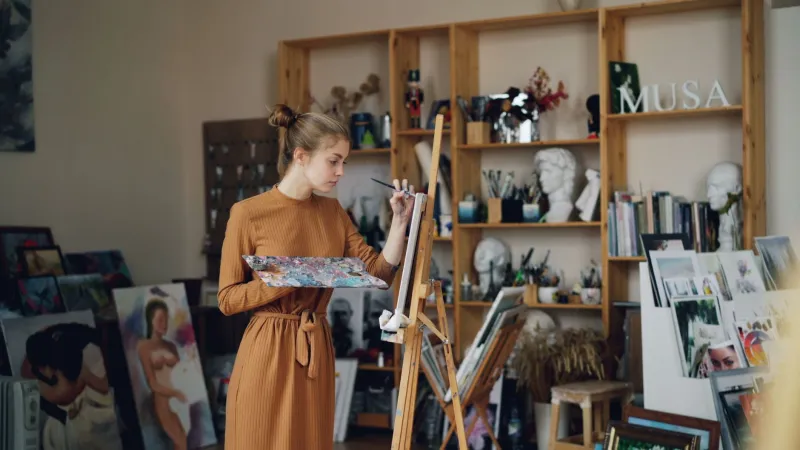
One of the more compelling developments in Austin's contemporary art scene is the degree to which artists are refusing the traditional separation between studio-based work and public practice. Painters whose canvases appear in gallery exhibitions are scaling their compositional sensibilities to the sides of buildings. Sculptors whose installations have shown in museum contexts are proposing works for parks, plazas, and transit corridors. The boundaries are dissolving — not because studio practice has been abandoned, but because it has been deliberately extended.
This integration has practical implications for how artists develop and sustain their careers. Public commissions provide income streams that gallery sales alone rarely guarantee. They also generate visibility that can, in turn, support gallery representation and collector relationships. The mural is, among other things, a form of professional infrastructure.
At the same time, artists are thoughtful about the risks of overextension. Working at public scale is physically demanding and logistically complex. It requires skills — project management, community facilitation, knowledge of exterior materials and weathering — that are not taught in most fine arts programs and must be acquired through experience.
A City in Conversation With Itself
Austin is a city that has never been entirely comfortable with its own growth. The tension between the creative community that shaped its identity and the economic forces that have reshaped its geography is visible everywhere — in rising studio rents, in the displacement of longtime residents, in the conversion of music venues into condominiums. Public art does not resolve these tensions. But it does something arguably more valuable: it makes them visible.
The murals appearing across Austin's neighborhoods are, in this sense, documents of a city in active negotiation with itself. They record what communities value, what they fear losing, and what they hope to preserve. They are painted on surfaces that may not last, in a city that is changing faster than most of its residents anticipated.
For the artists creating these works, that urgency is not a source of discouragement. It is, if anything, a reason to paint larger, to work faster, and to make every wall count.