Made Together: The Austin Artists Redefining Where Creative Authorship Begins and Ends

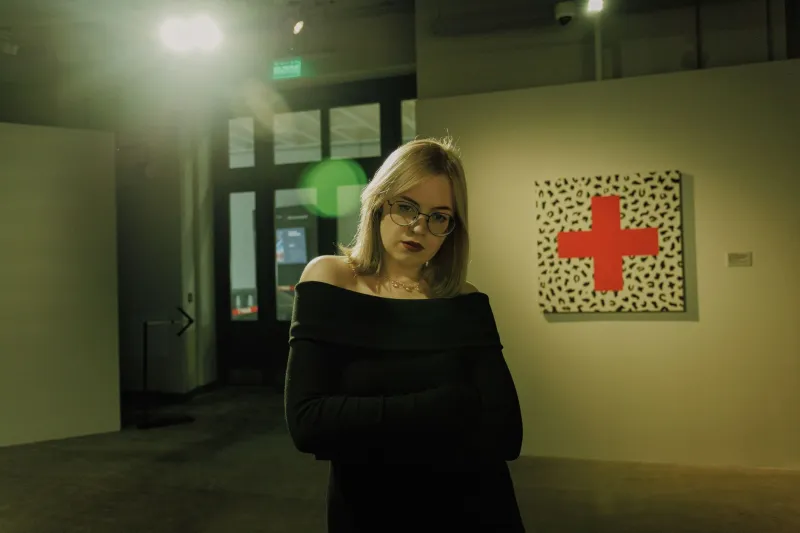
Photo by Photo by Vitaly Gariev on Unsplash on Unsplash
The traditional arc of an art transaction is elegantly simple: an artist makes something, a collector buys it, and the two parties go their separate ways. The work travels from studio to wall, and the story of its creation belongs entirely to the artist. But in studios across Austin, that arc is being deliberately disrupted—and what is emerging in its place is something far more complex, and far more interesting.
A meaningful number of Austin's working visual artists are now inviting collectors into the creative process before a work is finished—sometimes before it has truly begun. The collector is no longer positioned as the final destination for a completed object. They are becoming a participant in its making.
An Invitation Into the Studio
The forms this collaboration takes vary considerably from artist to artist. Some offer collectors a structured role in choosing materials—selecting pigment palettes, specifying dimensions, or identifying source imagery that will inform the composition. Others go further, conducting extended conversations with collectors whose personal histories, aesthetic instincts, or emotional preoccupations become embedded in the work's conceptual foundation.
Austin-based abstract painter Celestine Muro began offering what she calls "origin sessions" to a small number of collectors two years ago. During these sessions, she conducts a wide-ranging conversation with the collector—asking about formative visual experiences, spaces they inhabit, the emotional register they want the work to occupy in their lives. That conversation becomes the invisible architecture beneath the finished piece.
"I'm not making something to their specifications," Muro is careful to clarify. "The formal decisions are entirely mine. But the emotional territory the work explores—that comes from them. It's a different kind of intimacy than I've ever had with my practice."
The distinction she draws matters. This is not commission work in the conventional sense, where a patron dictates subject and style. It is something more nuanced: a collaborative excavation in which the collector's interiority becomes raw material for the artist's independent vision.
Blurring the Line Between Patron and Co-Author
As these practices proliferate, they are generating genuine debate within Austin's art community about the nature of authorship and the integrity of the artistic object. If a collector's stated preference for a particular color field shapes the final composition, are they, in some meaningful sense, a co-author? And if so, what does that mean for how the work is valued, attributed, and eventually resold?
These are not merely theoretical questions. They have practical implications for how artists price collaborative works, how collectors speak about them publicly, and how the broader market interprets works whose creation involved more than one imagination.
Mixed-media artist and South Austin native Tobias Wren, who has been incorporating collector narratives into his large-scale collage works for the past three years, has thought carefully about these questions. He has developed a formal framework he calls "contributive authorship"—a model in which the collector's input is acknowledged as a formative element of the work without displacing the artist as its primary creative intelligence.
"There's a difference between influence and authorship," Wren explains. "Every artist is influenced by conversations, relationships, environments. I'm just making that influence explicit and intentional. The collector contributed something real. But the work is still mine."
His collaborative pieces are priced at a premium over his standard studio work—not because the collector has purchased a co-authorship credit, but because the process is more labor-intensive, more emotionally demanding, and, ultimately, more singular.
What Collectors Are Actually Buying
For collectors who have participated in these collaborative arrangements, the appeal is not primarily about exerting creative control. It is about depth of connection to the finished object.
When a work contains something of the collector's own experience—a color that recalls a childhood home, a compositional tension that mirrors a personal conflict, a material chosen during a conversation about loss—the relationship between the collector and the work becomes categorically different from any other acquisition they might make.
This is, in essence, a portrait that does not look like a portrait. The collector's identity is present in the work without being literally depicted, and that invisible presence creates a bond that endures long after the transaction is complete.
Austin collector and art advisor Priscilla Fontaine, who has commissioned collaborative works from three local artists, describes the experience in terms of permanence. "I've bought a lot of art over the years. Some of it I've sold or moved on. The pieces I co-created—I can't imagine parting with them. They feel like they belong to me in a way that other works don't, even though the artist made every formal decision."
Authenticity in a New Register
The art world has always been preoccupied with authenticity, but the co-creative model asks us to expand our understanding of what authenticity means. A work can be authentically made by an artist while also being authentically shaped by a collector's experience. These two truths are not in conflict—they are, in fact, the very condition that makes collaborative works distinctive.
What is emerging in Austin is a model of art-making that treats the collector not as a consumer but as a collaborator—a participant whose engagement enriches the work without diminishing the artist's authority over it. In a market increasingly saturated with finished objects competing for attention, this approach offers something genuinely rare: a work that could not have existed without the specific person who will ultimately live with it.
That singularity, Austin's artists are discovering, is not a compromise of artistic integrity. It is its deepest expression.