The Price of Principle: What Austin Artists Sacrifice to Stay Honest to Their Work
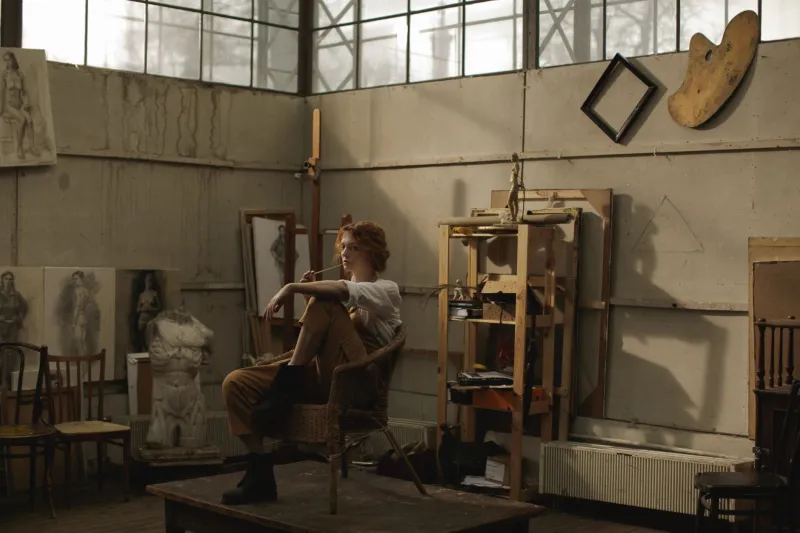
There is a particular kind of financial decision that rarely appears on any balance sheet. It has no invoice, no line item, and no depreciation schedule. Yet it accumulates steadily, quietly, and with considerable weight. In Austin's contemporary art community, practitioners refer to it in different ways—a missed opportunity, a passed commission, a principle held firm—but the underlying arithmetic is always the same. Choosing creative integrity over commercial convenience costs real money, and the artists absorbing that cost are doing so with increasing deliberateness.
Austin's art market has matured considerably over the past decade. With that maturation has come an expanding ecosystem of corporate clients, hospitality developers, and tech-sector patrons eager to decorate their spaces with work that carries cultural currency. For many artists, this represents opportunity. For others, it represents a test.
When the Commission Doesn't Fit
Consider the position of a painter whose work examines familial displacement and generational memory. The imagery is layered, emotionally demanding, and deliberately unsettling in its beauty. When a prominent Austin hospitality group approached her about a series of large-format pieces for a boutique hotel lobby, the financial offer was, by her own account, transformative. The scope of the project would have covered nearly eighteen months of studio expenses.
She declined.
"The brief asked for something warm, aspirational, and accessible," she explained during a recent conversation at her East Austin studio. "Those aren't bad qualities. But they're not mine. And if I make work that isn't mine just because someone will hang it somewhere visible, I've traded the thing that makes the work worth hanging in the first place."
This tension—between the visibility that commercial projects offer and the creative compromise they often demand—sits at the center of what might be called the authenticity tax. It is not a penalty imposed from outside. It is self-assessed, and it is paid in foregone income, delayed stability, and the sustained pressure of building a practice on narrower financial margins.
The Material Dimension
The authenticity tax is not solely a matter of commission decisions. For a growing cohort of Austin artists, it manifests equally in the choice of materials—a domain where ethical commitment and financial pragmatism frequently pull in opposite directions.
A sculptor working primarily with reclaimed and locally sourced organic materials describes a cost differential that compounds with every project. Commercially produced synthetic components are cheaper, faster to acquire, and far easier to work with at scale. The materials she insists upon—salvaged wood from demolished East Austin structures, natural pigments processed through relationships with regional suppliers—require significantly more time and expense to source.
"I've done the math," she said plainly. "I spend roughly thirty percent more on materials than I would if I made different choices. That's not nothing. That's a month of rent."
What sustains her commitment is not indifference to financial reality but rather a conviction that the material integrity of her work is inseparable from its conceptual integrity. To substitute cheaper components would be to introduce a dishonesty into the object itself—one that she believes collectors and serious viewers would eventually sense, even if they couldn't articulate why.
Institutional Pressure and the Subtle Compromise
Beyond individual commissions and material sourcing, the authenticity tax also accumulates through subtler institutional pressures. Gallery representation, grant applications, and residency programs each carry implicit expectations about what kind of work is legible, marketable, or appropriately aligned with current critical conversations.
Several Austin-based artists described the experience of softening the edges of their practice—not abandoning it entirely, but adjusting its presentation—in order to make it more palatable to institutional gatekeepers. The compromise rarely feels dramatic in the moment. A title is made less confrontational. A statement is rewritten to emphasize accessibility. A body of work is organized around its least challenging pieces for a particular submission.
Over time, however, these small adjustments accumulate into something more significant. One mixed-media artist who has been working in Austin for over a decade described the cumulative effect as a kind of drift. "You look up one day and realize the work you're showing isn't quite the work you're making. And you're not sure exactly when the gap opened."
Recognizing that drift, and correcting it, often means withdrawing from institutional channels that have become comfortable sources of income and visibility—which is itself a financial sacrifice.
The Longer Calculus
What is striking about the artists navigating this terrain is the sophistication of their economic thinking. Far from being indifferent to financial sustainability, they are often acutely aware of it—and they have developed frameworks for understanding authenticity not as a luxury but as a long-term professional asset.
The argument, stated plainly, is this: an artist who compromises the distinctive qualities of their practice in pursuit of short-term commercial gain may find that the practice itself loses the coherence that makes it valuable over time. Collectors who invest in work because of its singular vision are not investing in versatility. They are investing in a specific sensibility. Diluting that sensibility to chase broader appeal risks undermining the very quality that justified the investment.
"I think about it like compound interest working in reverse," offered one Austin-based conceptual artist who has spent years building a collector base through direct relationships rather than gallery representation. "Every time you make a choice that's slightly off from who you actually are, you're withdrawing from an account that took years to build. And the interest stops compounding."
This framework does not make the financial pressure disappear. Studio rent in Austin has risen sharply. Material costs continue to climb. The city's cost of living, once a comparative advantage for working artists, has narrowed considerably. The authenticity tax is real, and it is paid against a backdrop of genuine economic strain.
What the Choice Reveals
Perhaps the most instructive dimension of this conversation is not the sacrifice itself but what it reveals about how Austin's most committed practitioners understand the nature of their work. For artists who absorb the authenticity tax willingly, creative integrity is not a romantic abstraction. It is a professional standard with practical consequences—one they have chosen to uphold with full awareness of what that choice costs.
In a city that is simultaneously celebrated for its creative culture and pressured by the commercial forces reshaping it, that choice carries its own kind of statement. The artists making it are not naive about the market. They are, in many respects, more sophisticated about it than those who simply follow its incentives. They have simply decided that what they make, and how they make it, matters more than what it earns in the short term.
That decision does not guarantee financial security. It does not protect against the very real vulnerabilities of an artist's life in a high-cost city. But it does produce something that no commission can purchase and no institutional affiliation can bestow: a body of work that remains, from first mark to final form, entirely their own.


