Hosting the World: How Austin Artists Are Building Residency Programs in Their Own Backyards
For decades, the artist residency has functioned as a kind of pilgrimage — a departure from the familiar in search of creative renewal. The assumption was straightforward: to grow, an artist must leave. Yet in Austin, a quiet but consequential reversal is underway. A generation of working artists is choosing to remain rooted, transforming their studios, properties, and neighborhoods into destinations rather than departure points. In doing so, they are not only redefining what a residency can be, but also cementing Austin's standing as one of the country's most vital centers for contemporary visual art.
The Shift From Traveler to Host
The impulse to host rather than travel does not emerge from a reluctance to engage with the wider world. On the contrary, the Austin artists building residency programs describe a desire for deeper, more sustained exchange — the kind that a two-week fellowship in a remote setting rarely affords. When a visiting artist arrives in Austin for four to eight weeks, embeds within a working studio, and participates in the rhythms of a living creative community, something qualitatively different occurs.
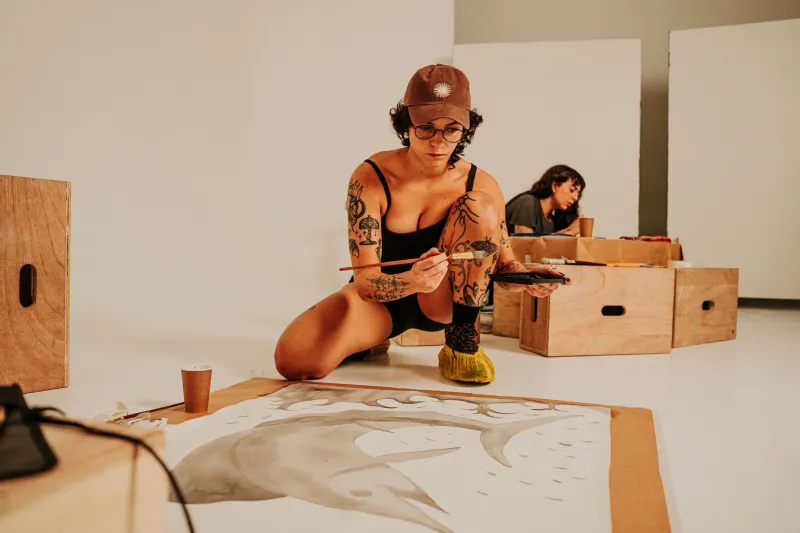
María Elena Voss, a mixed-media installation artist who converted a portion of her East Austin studio compound into a residency space three years ago, describes the transformation in terms of reciprocity. "When I traveled for residencies, I was always the outsider trying to absorb a place," she explains. "Now I watch visiting artists absorb Austin, and in the process, I see my own city differently. That reflection is creatively invaluable."
Voss's program, which accommodates two visiting artists at a time, draws applicants from New York, Chicago, Los Angeles, and increasingly from international cities including Berlin, São Paulo, and Seoul. The competitive selection process emphasizes conceptual rigor and a demonstrated interest in site-responsive work — a natural fit for a city whose built environment, cultural contradictions, and natural landscape offer abundant material.
Financial Architecture of a Homegrown Residency
Beyond the creative dimensions, the financial logic of hosting a residency is compelling — and often underappreciated. For established artists with underutilized studio space, a well-structured program can generate meaningful supplemental income through residency fees, workshop offerings, and affiliated programming such as public lectures and collector previews.
James Okafor, a sculptor whose practice centers on large-scale fabricated works, launched his residency program after recognizing that his 4,000-square-foot South Austin studio sat largely vacant between major project phases. "I was paying for space I wasn't fully using," he says. "Bringing in visiting artists covered a significant portion of my overhead and introduced a level of daily creative energy that I hadn't anticipated."
Okafor's model includes a structured fee for studio access and housing, supplemented by optional mentorship sessions that visiting artists may purchase separately. He has also cultivated relationships with local galleries and collectors who attend informal studio viewings during residency cycles, creating a pipeline that benefits both the visiting artists and his own professional network.
This kind of integrated financial architecture — where the residency functions simultaneously as income source, community hub, and professional development vehicle — represents a maturation of the DIY ethos that has long characterized Austin's independent art scene.
Community as Curriculum
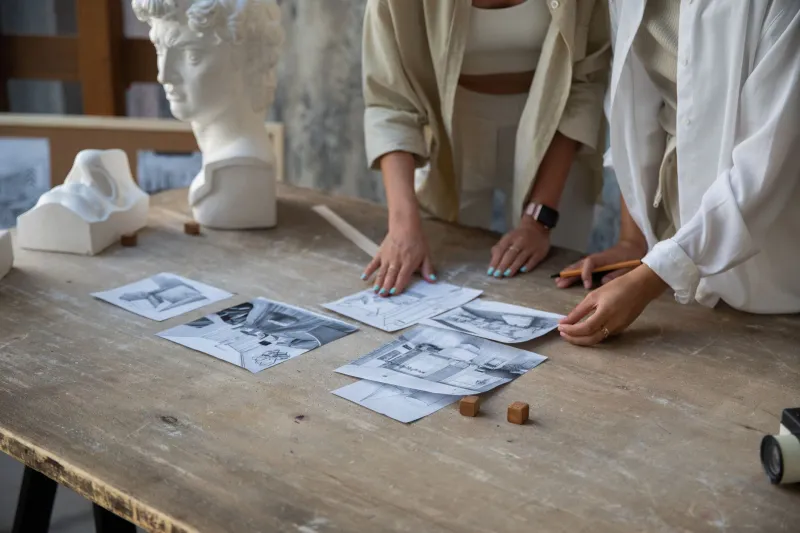
What distinguishes Austin's emerging residency culture from more institutionalized programs is the emphasis on genuine community immersion. Residents are not sequestered in isolated retreats; they are encouraged, and in some cases required, to engage with the city's broader creative ecosystem.
This might mean attending an opening at a South Congress gallery, participating in a critique hosted by a local arts collective, or collaborating on a public installation in one of Austin's rapidly evolving neighborhoods. The city itself becomes a kind of curriculum — one that reflects the tensions between rapid growth and cultural preservation, between technological innovation and handcraft tradition, between global ambition and intensely local identity.
Sophia Tran, a painter and printmaker who launched her residency program in partnership with two neighboring artists, describes Austin's complexity as a productive friction. "Visiting artists come here with certain expectations — they've heard about the music, the food, the tech industry. What surprises them is the depth of the visual art community and the way the city's contradictions feed the work," she says. "They leave with pieces that couldn't have been made anywhere else."
Tran's collaborative model, in which three studios share hosting responsibilities and pool resources for programming, has allowed for a more robust offering than any single artist could sustain independently. Shared costs, shared audiences, and a rotating curatorial vision give the program a vitality that mirrors the collaborative spirit Austin's art scene has long prized.
Strengthening Austin's Position as a Cultural Destination
The cumulative effect of these individual initiatives is significant. As more Austin artists establish residency programs, the city's reputation as a destination for serious creative work deepens. Visiting artists return to their home cities as informal ambassadors, carrying with them not only finished work but also firsthand accounts of Austin's creative infrastructure, its collector community, and its quality of life.
This word-of-mouth network has proven remarkably effective. Several Austin-based residency founders report that a substantial portion of their applicants cite the recommendation of a previous resident as their primary motivation for applying — a virtuous cycle that requires no marketing budget and grows organically over time.
For collectors and patrons who have long supported Austin's visual art community, these residency programs offer an additional point of engagement. Studio visits during active residency periods provide access to work in progress, opportunities to meet visiting artists, and a front-row view of the creative conversations that shape contemporary practice. Several program founders have noted that collector relationships formed during residency cycles have proven among the most enduring and generous of their professional lives.
A New Definition of Artistic Ambition
Perhaps the most significant implication of Austin's residency renaissance is what it suggests about the evolving definition of artistic ambition. The assumption that success requires constant movement — from city to city, residency to fellowship to international exhibition — is giving way to a more nuanced understanding of what it means to build a lasting creative practice.
To invest in one's own community, to create the conditions for meaningful exchange rather than simply seeking them elsewhere, is itself an act of artistic vision. The Austin artists building residency programs are not retreating from the world; they are inviting the world in, on their own terms, within a city that has earned its place at the center of American contemporary art.
In that sense, the decision to host is not a departure from ambition. It is, perhaps, its fullest expression.