Behind the Closed Door: How Austin Artists Are Turning Studio Access Into a Sustainable Business
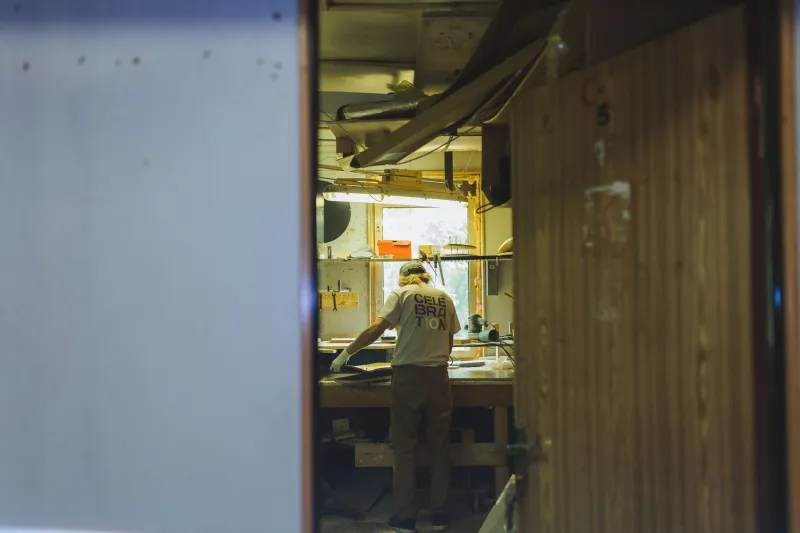
For most of art history, the studio visit was an act of generosity — an artist pulling back the curtain, offering a collector or a colleague an unmediated look at the mess, the thinking, and the work in progress. No price tag. No agenda. Just the rare privilege of witnessing a creative mind in its natural habitat.
That tradition is not disappearing in Austin. But it is evolving in ways that are at once practical, provocative, and deeply telling about the economic pressures facing working artists today.
Across the city — from converted warehouses in East Austin to shared studio complexes near South Congress — a growing cohort of contemporary artists has begun treating the studio visit not as an informal favor but as a structured, monetized experience. Some offer ticketed open-studio evenings with curated programming. Others sell recurring access through membership tiers, granting collectors and enthusiasts monthly behind-the-scenes visits, early previews of new work, and direct conversation with the artist at various stages of a project. A few have gone further still, designing immersive half-day experiences that blend studio access with art-making demonstrations, private acquisition opportunities, and intimate conversation.
The result is something the art world has not quite seen before: the studio visit as a product.
The Economics Behind the Invitation
The financial logic is not difficult to follow. Austin's cost of living has risen sharply over the past decade, and studio rents — particularly in the neighborhoods where creative communities have traditionally clustered — have followed. Gallery representation, once a reliable path to income stability, has become increasingly difficult to secure and increasingly uncertain in its returns. Meanwhile, the digital economy has trained audiences to expect access and intimacy from the artists they follow, creating an appetite for experiences that go beyond the polished gallery wall.
In this context, monetizing the studio visit is less a radical departure than a rational adaptation. Artists who have implemented these models describe them not as a compromise of their creative values but as an extension of the work itself — a way of making the process legible, the labor visible, and the relationship between maker and audience more substantive.
One Austin-based painter who works primarily in large-scale abstraction began offering monthly studio evenings two years ago, initially as an experiment. She capped attendance at twelve guests per session and priced tickets modestly, enough to cover materials and her time without feeling exclusionary. Within three months, the sessions were selling out. Within six, she had a waitlist. What surprised her most was not the revenue — though it was meaningful — but the quality of the conversations that emerged. "People come in with real curiosity," she noted. "They're not browsing. They're present. That changes what's possible in the room."
Rethinking What Collectors Are Actually Buying
At the heart of this trend is a subtle but significant reframing of value. The traditional art transaction asks a collector to evaluate a finished object — its aesthetic merit, its provenance, its investment potential. The studio visit economy asks something different. It invites the collector, or simply the interested observer, to invest in a relationship with a creative practice over time.
This distinction matters. Artists who have built studio visit programs report that participants frequently become collectors, but often in ways that feel less transactional and more invested. They understand the work differently because they have seen it become. They speak about it differently to others. In a market where word-of-mouth and personal advocacy remain among the most powerful forces driving collector interest, this kind of informed enthusiasm has genuine economic weight.
Several Austin artists have taken this logic further, structuring tiered access programs that mirror, in some respects, the subscription models familiar from the broader creator economy. Lower tiers might offer digital access — process videos, studio diary updates, first look at new works. Higher tiers translate that access into physical presence: private visits, participation in critiques, or the opportunity to commission work with direct input at each stage of its development. The result is less a gallery relationship than an ongoing collaboration, or at least the feeling of one.
The Ethics of the Open Door
Not everyone in Austin's art community greets this development with enthusiasm. Critics of the model raise legitimate concerns, chief among them the question of authenticity. If the studio visit is designed to generate revenue, does it remain a genuine act of creative transparency? Or does it become a performance of process — curated, managed, and ultimately as mediated as any gallery opening?
These are not easily dismissed questions. The studio has historically derived its power precisely from its unscripted quality. It is the place where failure is visible, where the work is not yet what it will become, where the artist is most fully themselves. Commodifying that environment, even carefully, risks transforming it into something more theatrical than true.
Artists navigating this tension tend to acknowledge it directly. The most thoughtful practitioners describe deliberate choices about what to show and what to withhold — not out of deception, but out of a recognition that some aspects of creative process are genuinely private, and that protecting them is not dishonest but necessary. "I'm not selling access to my entire interior life," one sculptor explained. "I'm sharing the parts of the process that I think are genuinely interesting and useful to someone who cares about art. That's a curatorial decision, not a betrayal."
The question of equity also surfaces in these conversations. Ticketed studio visits, however modestly priced, create a financial barrier that free studio access does not. Some artists have responded by reserving a portion of their sessions for students, emerging artists, or community members who would not otherwise be able to participate, treating the revenue from paying guests as a subsidy for broader access. It is an imperfect solution, but it reflects a genuine effort to hold multiple values simultaneously.
What This Moment Reveals
The studio visit economy is, in many respects, a symptom of a larger shift in how artists understand their role in relation to their audience. The romantic model of the solitary genius, working in obscurity until a finished masterpiece emerges, has given way — in Austin as elsewhere — to something more porous, more relational, and more openly engaged with the practical realities of sustaining a creative life.
This is not a loss. If anything, it is an honest reckoning. The labor of making art has always been invisible to those who only encounter the finished work. The studio visit, whether free or ticketed, corrects that invisibility. It asks the audience to see the full picture — the time, the uncertainty, the iteration, the commitment — and to assign value accordingly.
For Austin's artists, who have long prided themselves on a certain directness and a resistance to the more rarefied conventions of coastal art markets, this kind of transparency feels native. It is consistent with a creative culture that has always valued authenticity over mystique, and community over exclusivity.
The door is open. The question now is simply what it costs to walk through it — and whether the answer is one that artists, collectors, and communities can live with together.