Beautifully Broken: How Austin's Artists Are Finding Power in the Unpolished
There is a particular kind of courage required to leave something unfinished — or rather, to decide that what others might call unfinished is, in fact, exactly right. Across studios and gallery walls throughout Austin, that courage is becoming increasingly visible. A growing cohort of the city's contemporary artists is making a pointed choice: to resist the gravitational pull of the flawless surface and instead let the evidence of process remain, exposed and unapologetic.
This is not carelessness. It is conviction.
The Mark Left Behind
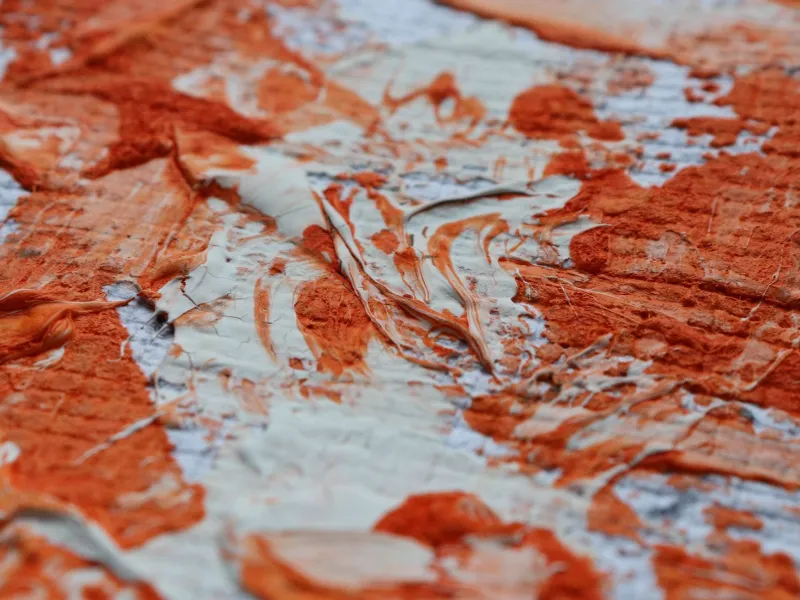
Walk through any number of Austin's independent gallery spaces or artist-run venues, and you will begin to notice a pattern. Canvases bear the ghost of earlier compositions — pentimento rising through layers of pigment like memory refusing to stay buried. Ceramic vessels carry the indentations of thumbs pressed into clay during moments of uncertainty. Mixed-media installations leave raw seams unhidden, scaffolding visible, adhesive occasionally spilling past its intended boundary.
For artists working in this vein, these are not accidents to be corrected in a second pass. They are, quite deliberately, the point.
"There is so much information in a mark that hasn't been smoothed away," explains one Austin-based painter whose large-scale figurative works have garnered attention for their textured, layered surfaces. "When I sand something down or overpaint it to perfection, I am essentially editing out the truth of how that piece came to exist. Why would I want to do that?"
The question is rhetorical, but it points toward something genuine: a philosophical reconsideration of what authenticity means in contemporary visual art, and what audiences are actually seeking when they stand before a work and feel something.
Vulnerability as Visual Strategy
The broader cultural conversation around vulnerability — accelerated by years of public discourse on mental health, authenticity in social media, and the exhaustion of curated perfection — has found a natural corollary in the visual arts. Austin, a city that has long positioned itself as a counterpoint to the overly polished and commercially driven, provides fertile ground for this particular artistic temperament.
Several artists working here speak openly about the connection between their personal relationship with imperfection and the formal choices they make in the studio. For one sculptor working primarily in reclaimed wood and oxidized metal, the decision to leave surfaces raw — to let rust bloom and grain split — came directly from a period of personal upheaval.
"I had spent years trying to make things look resolved," she says, standing beside a towering installation whose weathered components seem almost to breathe. "And then I went through something difficult, and I realized that nothing in my life looked resolved. So why should the work?"
The result is art that does not merely depict vulnerability but embodies it structurally. The material itself carries the story.
Process as Subject Matter
Among the artists embracing imperfection in Austin, there is a recurring insistence that the process of making — not merely the finished object — constitutes the true subject of the work. This aligns with a lineage of process-based art that stretches back through Arte Povera and Abstract Expressionism, but it takes on a distinctly contemporary inflection here.
Where earlier generations of process artists were often making conceptual arguments about the nature of art itself, many Austin artists working today are more interested in the emotional and relational dimensions of visible process. The smudge, the drip, the seam — these become points of connection between the artist's interior life and the viewer's experience.
"When someone sees a work and they can feel the hand in it," says one mixed-media artist whose collage-based pieces layer torn paper, wax, and ink in ways that preserve every wrinkle and fold, "they understand that a person made this. Not a machine, not an algorithm, not a brand. A person who was uncertain and trying."
That quality of evident human effort is, paradoxically, what makes the work feel most resolved — not in a technical sense, but in an emotional one.
Against the Tyranny of the Finished Object
There is also, among some Austin artists, an explicit critique embedded in the rejection of polished finishing. In an era when digital tools make seamlessness more accessible than ever, and when social media platforms reward the visually pristine, the choice to work against that current carries meaning beyond personal preference.
To leave a surface rough is to insist on a different set of values: patience over efficiency, process over product, presence over performance. For artists navigating the commercial pressures of the contemporary art market — where collectors sometimes favor work that photographs well and fits cleanly into designed interiors — this insistence can carry real professional risk.
"I have had conversations with people who were interested in the work until they got close and saw that the edges weren't clean," admits one painter who works with encaustic and found materials. "And I had to decide whether that feedback was something I needed to act on. I decided it wasn't."
The decision to hold that line, to resist the temptation to smooth away what makes the work genuinely itself, is one that several Austin artists describe as among the most clarifying they have made in their practice.
What Viewers Are Actually Looking For
Perhaps the most compelling evidence that this movement is resonant rather than merely reactive is the response it generates from audiences. Artists who have made imperfection central to their practice report that viewers frequently linger longer before their work — that the unresolved surface invites a different quality of attention than the polished one.
"People want to get close," observes one artist whose textured paintings have found homes with collectors across the country. "They want to understand how it was made. And I think that impulse is really about wanting to feel less alone — wanting to see that someone else was uncertain and kept going anyway."
In that framing, the imperfect surface becomes something almost generous: an artist's willingness to show their working, to let the viewer into the studio in a way that the pristine object never allows.
Austin's Particular Receptivity
It is worth noting that Austin's art community — shaped by decades of DIY culture, an ethos of creative independence, and a deep suspicion of the overly corporate — may be especially well suited to nurturing this kind of practice. The city has long valued the handmade, the locally rooted, and the authentically strange over the slick and the globally standardized.
In that sense, the artists embracing imperfection here are not bucking local tradition so much as deepening it — finding in the unpolished surface a visual language that speaks to something Austin has always, in its best moments, understood: that what is real is usually a little rough around the edges, and that this is not something to apologize for.
The work being made in this spirit is, in the end, an act of faith — faith that the viewer will meet the artist where the surface breaks open, and that what is found there will be worth the looking.