Cutting Out the Middleman: Austin Artists Who Are Rewriting the Rules of Collector Relationships
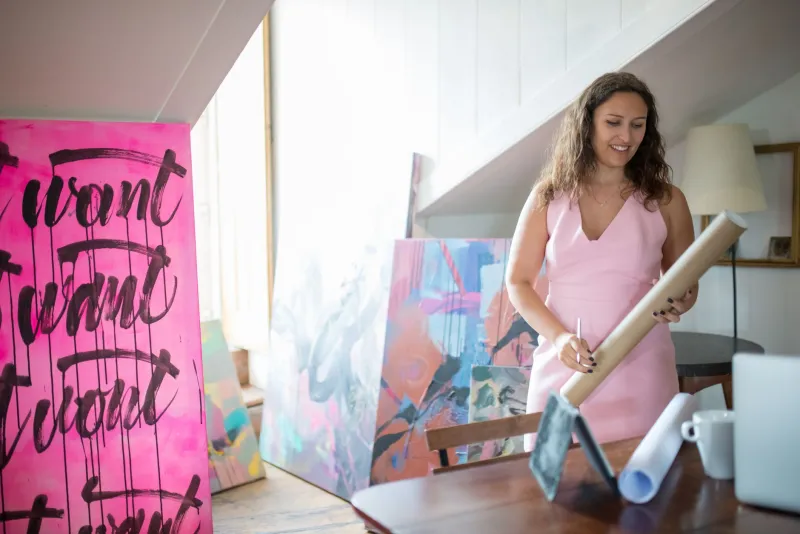
For much of the twentieth century, the path between a finished canvas and a living room wall ran almost exclusively through a gallery. A dealer selected the work, set the price, managed the conversation, and — in exchange for roughly half the sale — granted an artist access to a world of serious collectors. That arrangement, long accepted as simply the way things worked, is now being examined with fresh skepticism by Austin's contemporary visual artists.
The shift is not happening overnight, and it is not born of hostility toward galleries as institutions. Rather, it reflects a broader recalibration of power, access, and identity in a city whose creative community has grown both more ambitious and more entrepreneurially minded.
The Studio as Showroom
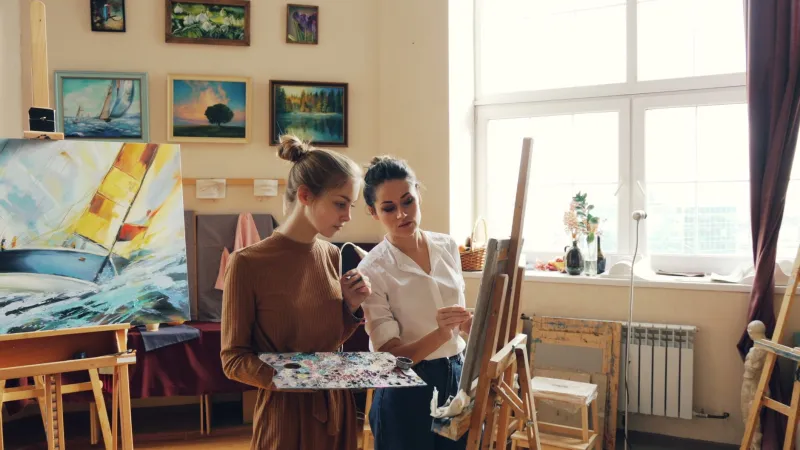
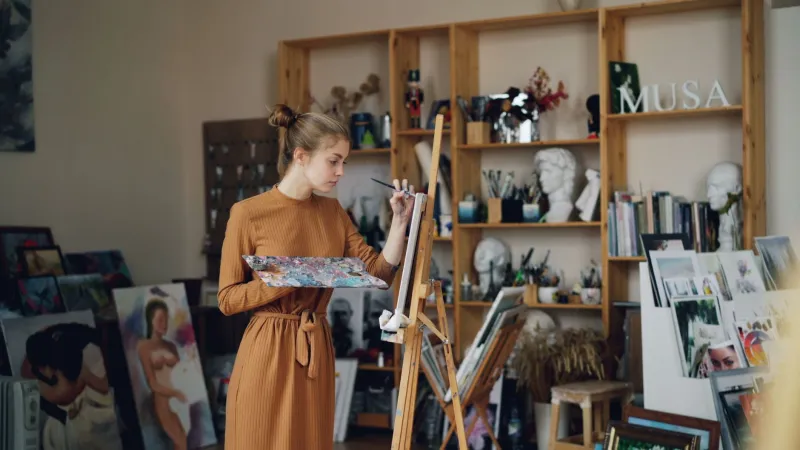
One of the most tangible expressions of this movement is the studio open house — an event format that has gained remarkable momentum across Austin's arts districts. Artists in neighborhoods like East Cesar Chavez, Mueller, and the emerging creative corridors near South Congress are opening their workspaces to collectors, not just for a single evening, but as recurring, intentional gatherings.
The appeal is straightforward: when a collector stands inside the space where a work was made, surrounded by the materials, the sketches, and the unfinished pieces that preceded it, the transaction becomes something richer than a commercial exchange. It becomes a relationship. Artists who host these events consistently report that visitors who enter as strangers often leave as long-term supporters — people who return not just to purchase, but to follow the arc of a creative practice over years.
This intimacy is something a white-walled gallery, however prestigious, struggles to replicate. The studio visit collapses the distance between maker and buyer in ways that are deeply personal and, for many artists, deeply motivating.
Digital Platforms as Direct Channels
Beyond the physical studio, Austin artists are increasingly sophisticated in their use of digital platforms to reach collectors without intermediaries. The assumption that online sales are the domain of emerging or less serious artists has been quietly dismantled. Established practitioners with significant exhibition histories are maintaining personal websites with integrated e-commerce, building private collector newsletters, and using platforms like Artwork Archive to manage relationships with buyers across the country.
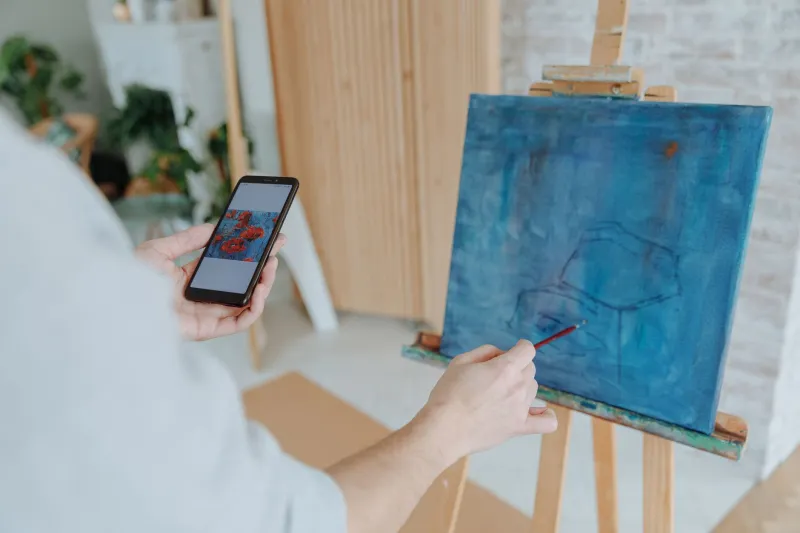
Social media, for all its complications — a subject LD Austin Art has examined at length — remains a primary discovery mechanism. But the artists who are building the most durable collector relationships are those who treat platforms like Instagram not as galleries, but as introductions. The real conversation, they explain, moves quickly to direct messages, email correspondence, and eventually studio visits or video calls. The platform opens the door; the relationship sustains what follows.
This approach requires a kind of personal branding fluency that art school rarely teaches. Artists are learning — sometimes through trial and significant error — how to present their work, articulate their practice, and communicate value without feeling as though they are compromising their creative identity. The tension between self-promotion and artistic integrity is real, but many Austin artists describe finding a language that feels authentic rather than transactional.
Rethinking Pricing and Transparency
One of the more consequential changes accompanying the direct-to-collector model is a new candor around pricing. In the traditional gallery system, prices were often opaque, subject to negotiation, and sometimes varied depending on who was asking. Independent artists working directly with collectors are increasingly embracing transparency — publishing prices openly, explaining their pricing logic, and treating the cost of a work as part of the story rather than a separate, uncomfortable conversation.
This transparency has an unexpected benefit: it builds trust. Collectors who understand why a piece is priced as it is — the hours invested, the cost of materials, the scale of the work within an artist's broader career — are more likely to feel confident in their purchase and more likely to return. For artists, it also creates a discipline around valuing their own labor honestly, something that the gallery system, with its emphasis on perceived market value, did not always encourage.
Community as Infrastructure
Perhaps the most underappreciated dimension of this shift is the role of community. Austin's independent artists are not navigating this new landscape alone. Informal networks — artist collectives, shared studio buildings, and peer groups organized around specific media or neighborhoods — function as a kind of distributed infrastructure, sharing knowledge about collectors, pricing strategies, legal considerations, and platform mechanics.
Organizations and artist-run spaces throughout Austin facilitate introductions that once required gallery affiliation. Pop-up exhibitions in unconventional venues, collaborative studio tours, and artist-curated group shows in private homes or commercial spaces create access points for collectors who may never set foot in a traditional gallery but are genuinely interested in acquiring contemporary work.
This community-centered approach also reframes what it means to build a sustainable career. Success is measured not only in sales, but in the depth and continuity of relationships — with collectors who become advocates, with fellow artists who share opportunities, and with a city that increasingly recognizes its creative community as a cultural asset worth investing in.
What Is Lost, and What Is Gained
It would be incomplete to describe this shift without acknowledging its costs. Galleries provide services that are genuinely difficult to replicate independently: institutional validation, access to art fairs, relationships with major collectors, and the critical framing that comes with a curated exhibition. For artists pursuing museum acquisitions or international recognition, gallery representation remains a meaningful credential.
But for a significant and growing number of Austin's working artists, the calculation has changed. The autonomy to set one's own prices, choose one's own collectors, and control the narrative around one's work carries a value that is not easily quantified — but is deeply felt. The gallery wall, for so long the primary threshold between artist and audience, is no longer the only door worth walking through.
What Austin's contemporary art scene is demonstrating, with increasing clarity, is that the relationship between maker and collector does not require a gatekeeper to be meaningful. It requires trust, consistency, and genuine human connection — qualities that, as it turns out, artists are exceptionally well-positioned to cultivate on their own terms.