Performed Realness: How Austin Artists Are Escaping the Authenticity Myth
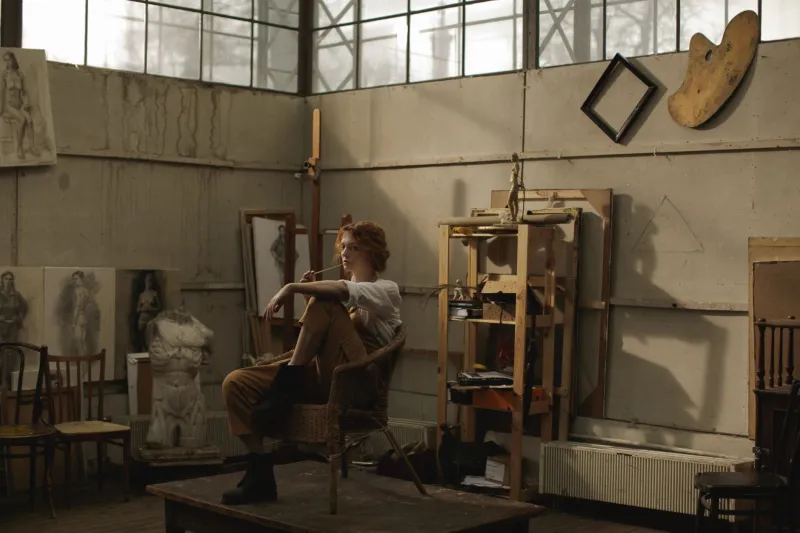
There is a particular kind of artist story that Austin has long rewarded. It involves a rented studio in a neighborhood that used to be affordable, a practice built on local materials or local grievances, and a biography that signals struggle, rootedness, and resistance to the commercial mainstream. The narrative is familiar because it has been repeated so often that it functions less like a personal history and more like a genre.
For a certain generation of Austin artists, that genre was liberating. It offered a framework for understanding creative work outside the machinery of institutional validation or market pressure. But something has shifted. Increasingly, the artists shaping Austin's most compelling contemporary practice are not leaning into that mythology—they are deliberately walking away from it.
The Weight of the Origin Story
Authenticity, as it has been constructed in Austin's art world, is rarely just about honesty. It carries a specific aesthetic vocabulary: an attachment to the handmade, a suspicion of polish, a preference for local references over universal ones, and an almost reflexive distrust of anything that reads as commercially motivated. To be authentic, in this sense, is to perform a particular relationship to place, process, and economics.
The problem is that performance, by definition, is not authenticity. It is theater.
Artists who have spent years navigating this dynamic describe a quiet exhaustion with the requirement to narrate their work through the lens of lived experience and geographic identity. The pressure is rarely overt—no gallerist hands out a checklist of approved authenticity markers—but it operates through the subtle mechanics of community approval, social media engagement, and the curatorial logic of shows that privilege certain kinds of stories over others.
When an artist's biography becomes the primary frame through which their work is understood, the work itself can recede. The painting, the installation, the sculpture—these become illustrations of a life rather than objects with their own conceptual weight.
Embracing the Commercial Without Apology
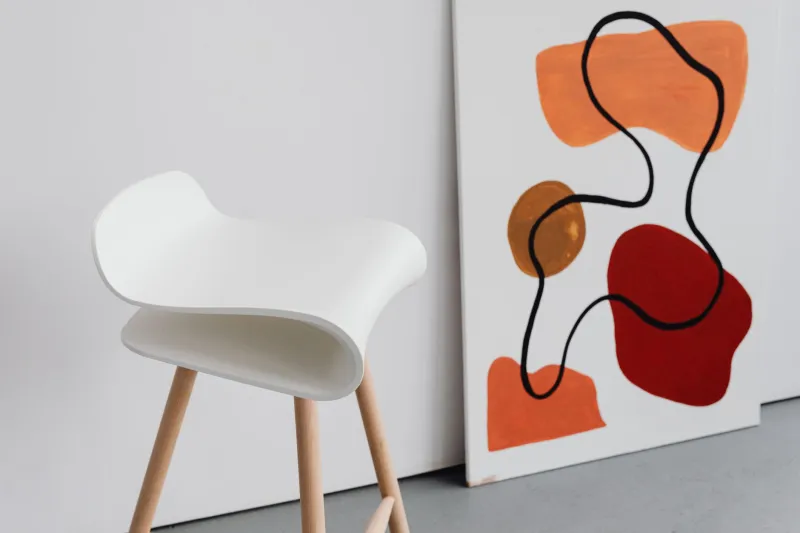
One of the more provocative moves being made by a contingent of Austin's contemporary artists is a deliberate embrace of commercial aesthetics—not as irony, and not as critique, but as a straightforward creative choice. Clean lines, high-production finishes, design-adjacent visual languages: these elements, once coded as signs of compromise, are being reclaimed as legitimate artistic decisions.
This is not a new tension in visual art broadly. The conversation about commercial aesthetics and artistic integrity has been running since at least the Pop Art era. But in Austin's context, where the indie credibility framework has been unusually durable, the shift carries particular significance. It represents a refusal to accept the premise that accessibility and rigor are mutually exclusive—or that an artist who cares about how their work looks on a collector's wall has somehow betrayed the practice.
What is striking is how this embrace of commercial sensibility is, paradoxically, producing work that feels more honest. When artists stop performing anti-commercialism, they often find themselves making clearer decisions about what they actually want their work to do and who they want it to reach.
Refusing the Locality Requirement
Austin has a complicated relationship with its own mythology. The city's cultural identity has long been built on a narrative of creative distinctiveness—a place that does things differently, that resists the homogenizing forces of national culture, that produces artists who are proudly, defiantly local. For artists working here, that narrative has historically carried real weight in how their work is received and contextualized.
But locality, like authenticity, can become a constraint when it functions as a requirement rather than an option. Artists who draw on influences outside the Austin canon—who are more interested in conversations happening in international contemporary art than in regional scene politics—have sometimes found themselves positioned as outliers or, worse, as artists who have lost touch with their roots.
The more productive framing, which a growing number of Austin practitioners are adopting, treats geographic context as one element of an artistic identity rather than its defining feature. Austin is where the work is made. It is not necessarily what the work is about, and it is certainly not a credential that needs to be continuously renewed.
What Genuine Evolution Actually Looks Like
The irony embedded in the authenticity trap is that the pressure to remain authentic—to stay true to a particular version of an artistic identity—is itself a force against genuine evolution. Artists who are locked into an origin story cannot easily revise it. They cannot experiment with aesthetics that contradict their established narrative, cannot pursue influences that complicate their local identity, cannot change their mind about what their work is for.
The artists who are most visibly breaking from this pattern are not doing so by rejecting sincerity. They are not becoming cynical or detached. If anything, they describe their current practice as more personally honest than the work they made when they were actively managing their authenticity. The difference is that they have stopped confusing the performance of authenticity with the experience of it.
Genuine artistic evolution requires the freedom to contradict oneself, to pursue aesthetics that do not fit neatly into an established identity, to make work that does not come with a pre-approved narrative. That freedom is not available to artists who have accepted the premise that their credibility depends on consistency with a persona.
A More Demanding Honesty
What is emerging in Austin's contemporary art scene is not a rejection of honesty—it is a demand for a more rigorous version of it. The artists moving away from the authenticity framework are not abandoning integrity; they are refusing to let integrity be defined by external markers of indie credibility or geographic loyalty.
This is, in some respects, a harder position to occupy. The authenticity narrative, for all its constraints, offered a clear set of signals. Artists who rejected commercial aesthetics, who stayed local, who wore their origins visibly—these artists knew how to read the room and how to be read by it. Stepping outside that framework means accepting a degree of ambiguity about how the work will be received and by whom.
But ambiguity, for many of Austin's most thoughtful contemporary practitioners, is precisely the point. Work that cannot be immediately categorized, that does not arrive pre-explained by its maker's biography, that refuses to perform its own sincerity—this is work that asks something of its audience. It is work that trusts the viewer to engage without the scaffolding of an origin story.
In that sense, the rejection of performed authenticity may be the most genuinely honest move Austin's art scene has made in years.