Stronger Together: How Austin's Artist Collectives Are Rewriting the Rules of Creative Survival

Photo by Photo by Vitaly Gariev on Unsplash on Unsplash
There is a particular kind of exhaustion that settles over a mid-career artist working alone. The studio rent climbs. The gallery commission takes its share. The administrative labor — the emails, the grant applications, the social media maintenance — accumulates quietly until it threatens to crowd out the work itself. For a growing number of Austin-based visual artists, the response to this pressure has not been resignation but reorganization. They are forming collectives, pooling resources, and discovering that proximity to other serious practitioners yields something no individual hustle can manufacture: structural power.
Austin's art scene has long celebrated the independent spirit — the painter in the converted garage, the sculptor negotiating directly with collectors, the muralist building a following one commission at a time. That ethos remains vital. But alongside it, a more collaborative model is gaining serious traction, and the artists leading it argue that collective practice is not a retreat from ambition. It is, in fact, its most sophisticated expression.
The Economics of Shared Infrastructure
The practical argument for collective practice begins with overhead. Studio space in Austin, particularly in the neighborhoods that have historically attracted artists — East Cesar Chavez, the stretch along South Congress, the older industrial corridors near the Domain — has become substantially more expensive over the past decade. For an artist working alone, absorbing that cost means either accepting a smaller, less functional workspace or diverting income that might otherwise support materials, travel, or professional development.
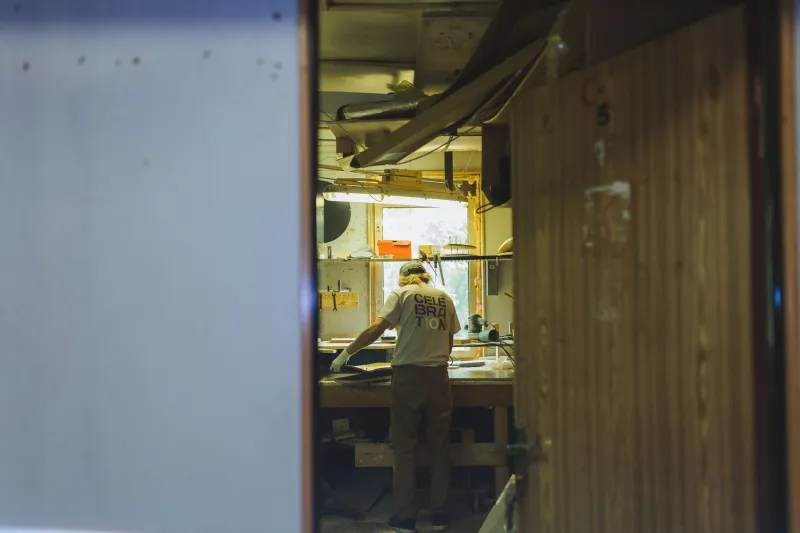
When artists pool resources, the calculus changes. A collective of six or eight practitioners sharing a single large studio can access facilities — loading docks, spray booths, large-format printing equipment, professional lighting rigs — that would be prohibitive for any individual member to secure independently. The fixed costs are distributed, and the variable costs, from shared supply orders to collectively negotiated insurance policies, become more manageable.
Beyond the financial mechanics, shared infrastructure produces something harder to quantify: daily proximity to other working artists. The conversations that happen between studio sessions, the informal critiques that emerge organically from shared space, the awareness of what peers are making and why — these interactions accelerate creative development in ways that scheduled workshops or occasional studio visits simply cannot replicate.
Exhibition Power and Collective Visibility
One of the more consequential advantages that Austin's collectives have demonstrated is their capacity to approach exhibition opportunities with genuine leverage. A single emerging or mid-career artist requesting a solo show at a respected venue is asking an institution to take a significant risk on an unproven draw. A collective presenting a cohesive group exhibition offers something different: a built-in audience drawn from the combined networks of every participating artist, a more complex and narratively interesting curatorial proposition, and a shared promotional infrastructure that multiplies reach without multiplying cost.
Several Austin-based collectives have leveraged this dynamic to secure exhibition opportunities at venues that might have been inaccessible to their individual members working independently. When a group of artists presents a unified conceptual framework — a shared investigation of material, place, memory, or social structure — curators and institutional programmers have more to work with. The exhibition becomes a statement rather than a showcase.
This visibility compounds over time. Collectors who encounter the work of one collective member are naturally introduced to the broader group. Press coverage of a collective show reaches audiences that no single artist's promotional effort would likely capture. The collective, in effect, functions as a form of distributed marketing infrastructure, and every member benefits from the aggregate attention.
Bargaining Power in a Commercialized Market
Austin's art market has grown considerably more sophisticated — and considerably more commercial — over the past several years. The influx of wealth into the city, driven by the technology sector and the broader economic transformation of Central Texas, has attracted collectors with significant purchasing power. It has also attracted galleries and art advisory services operating with a level of commercial professionalism that can be disorienting for artists accustomed to more informal arrangements.
In this environment, individual artists negotiating alone are at a structural disadvantage. They lack information about prevailing commission rates, standard contract terms, and the leverage that comes from being genuinely difficult to replace. Collectives change this dynamic meaningfully. When a group of well-regarded artists approaches a gallery or a corporate art buyer together — whether to negotiate exhibition terms, licensing arrangements, or large-scale commission work — they arrive with something an individual cannot offer: the credible possibility of walking away.
Some Austin collectives have gone further, developing their own internal standards for commercial engagement. These might include minimum acceptable commission rates, contractual requirements around reproduction rights, or shared policies on institutional partnerships. By establishing these norms collectively and adhering to them publicly, they effectively raise the floor for everyone — including artists who are not formal members but who benefit from a market environment where certain standards have been normalized.
The Social Architecture of Effective Collectives
Not every experiment in collective practice succeeds, and the artists who have built durable collaborative structures in Austin are candid about the organizational challenges involved. Creative autonomy is not easily surrendered, even partially. Disagreements about aesthetic direction, financial transparency, and the equitable distribution of opportunities can fracture a collective that has not established clear governance structures from the outset.
The collectives that have demonstrated longevity in Austin tend to share several structural characteristics. They maintain written agreements governing financial contributions and distributions, decision-making processes, and the terms under which members may join or depart. They distinguish carefully between collective projects — work undertaken in the name of the group, with shared credit and shared proceeds — and individual practice, which members pursue independently and retain full ownership of. And they invest deliberately in the relational infrastructure of the group: regular meetings, honest evaluations of what is and is not working, and a shared commitment to the principle that the collective's health takes precedence over any single member's short-term interests.
What the Collective Model Reveals About Austin's Art World
The rise of collective practice in Austin is not simply a response to economic pressure, though economic pressure is certainly part of the story. It reflects something deeper: a growing skepticism among serious artists about the individualist mythology that has long structured how the art world understands success. The solitary genius, working in isolation toward a singular vision, is a compelling narrative. It is also, for most working artists, an unsustainable one.
The collectives forming in Austin are not abandoning individual vision. Their members remain distinct creative voices with distinct bodies of work. What they are abandoning is the fiction that those voices are best served by working in isolation. They are choosing, instead, a model that acknowledges the social and economic realities of contemporary art practice and builds structures capable of supporting serious work over the long term.
In a city as dynamic and as contested as Austin — where the pressures of rapid growth and commercialization are felt acutely by working artists — that choice carries considerable weight. The collective is not a compromise. It is, increasingly, the most thoughtful response available to artists who intend to remain here and to keep making work that matters.