Severing Ties: Why Austin's Artists Are Walking Away from Gallery Representation

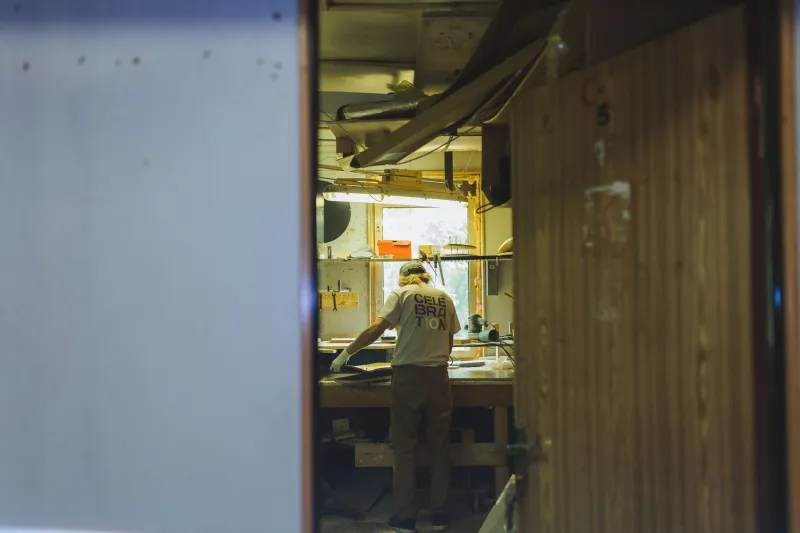
Photo by Photo by Jessica Pamp on Unsplash on Unsplash
For generations, the gallery system functioned as the primary gateway between artists and collectors. It was an arrangement built on mutual necessity: galleries offered visibility, institutional credibility, and access to networks that individual artists could rarely cultivate alone. In exchange, artists surrendered a portion of their revenue—and, in many cases, far more than that.
Today, a growing number of Austin's working artists are questioning whether that exchange still makes sense. Some have quietly let representation contracts lapse. Others have made more deliberate, public departures. What emerges from conversations with those who have walked away is not a story of bitterness alone, but a careful, often painful reckoning with what the gallery model actually costs.
The Commission Question Nobody Wants to Answer
The most visible point of friction is financial. Standard gallery commission rates in the United States typically range from forty to sixty percent of the final sale price, with some commercial galleries operating closer to the upper end of that spectrum. For an Austin-based artist selling a mid-sized canvas at four thousand dollars, a fifty-percent commission leaves two thousand dollars—before accounting for the cost of materials, framing, transportation, and studio overhead.
Several Austin artists who spoke with LD Austin Art described feeling financially squeezed by structures that had not meaningfully evolved in decades. One painter, who asked to remain anonymous to avoid professional repercussions, described signing with a well-regarded local gallery only to discover that the contract included a clause preventing her from selling directly to buyers who had initially encountered her work through the gallery's exhibitions—a restriction that extended eighteen months beyond the termination of the agreement.
"I had collectors reaching out to me directly," she said. "People who had seen my work at an opening and wanted to stay connected. And I had to explain that I legally couldn't sell to them. That felt like a fundamental misalignment of priorities."
Creative Control as the Hidden Cost
Beyond commissions, artists describe a subtler but equally consequential form of constraint: the influence galleries exert over creative direction. This pressure rarely arrives as an explicit demand. More often, it surfaces as a pattern of suggestions—requests to revisit a palette that sold well, gentle discouragement of work that feels too experimental or politically charged, and an implicit understanding that continued representation depends on producing work the gallery can confidently move.
A mixed-media installation artist based in East Austin described a gradual drift in his practice that he only recognized in retrospect. Over three years with a gallery, he had progressively moved away from the large-scale, site-responsive installations that had defined his early career and toward smaller, more saleable objects. The work sold. But when he revisited photographs from that period, he barely recognized himself in it.
"The gallery never told me what to make," he said. "But the feedback loop was constant. You start to internalize what gets enthusiasm and what gets silence. That's a form of editorial control, even if no one signs off on your sketches."
When Contracts Become Cages
The legal architecture of gallery representation remains poorly understood by many artists entering the system for the first time. Unlike the music or publishing industries, where standard contract terms are widely documented and debated, the visual art world has historically operated with significant opacity. Exclusivity clauses, pricing controls, and right-of-first-refusal provisions are common but rarely explained in plain terms at the point of signing.
Austin arts attorney and occasional gallery consultant Dana Merritt, who has reviewed representation agreements for working artists in Central Texas, notes that many contracts she encounters contain provisions that artists would likely contest if they fully understood them. "Artists are often so excited to be offered representation that they don't read carefully," she observed. "And galleries don't always volunteer explanations. It's not necessarily predatory—it's just an information asymmetry that consistently benefits one party."
Some contracts require artists to notify galleries before accepting commissions, exhibiting in competing venues, or even posting new work on personal websites. For artists building direct collector relationships through social media—a practice that has become central to independent sustainability—such clauses can effectively prohibit the very activities that sustain their visibility between gallery shows.
The Independence Calculation
Walking away from a gallery is not without consequence. Representation still carries institutional weight in contexts that matter: grant applications, museum acquisitions, critical coverage, and invitations to art fairs. Artists operating independently must build those relationships themselves, often without the staffing, industry contacts, or physical exhibition infrastructure that galleries provide.
What has changed is the availability of alternatives. Direct-to-collector platforms, artist-run cooperative spaces, and studio open-house models have created viable pathways that did not exist a decade ago. Austin's creative infrastructure—its density of independent venues, its culture of collaborative entrepreneurship, and its engaged collector community—makes the city a particularly hospitable environment for artists attempting to reconstruct their careers outside conventional representation.
A sculptor who terminated a gallery agreement two years ago described the transition as disorienting but ultimately clarifying. "The first six months were genuinely frightening," she admitted. "I had no guaranteed exhibition schedule, no one handling logistics. But I also had complete ownership of every decision. I started doing studio visits, building relationships directly with the people who were actually buying. That intimacy changed everything about how I understood my own practice."
What the Gallery System Loses
It would be a misreading to frame this shift as purely adversarial. Many gallery directors are themselves navigating a difficult landscape—rising overhead costs, shrinking foot traffic in traditional commercial spaces, and the challenge of competing for collector attention in an era of relentless digital noise. Some galleries have responded by experimenting with adjusted commission models, more transparent contract terms, and hybrid representation structures that allow artists greater flexibility.
The tension, at its core, reflects a broader renegotiation of value in the contemporary art market. Artists who once depended entirely on institutional intermediaries now possess direct lines to audiences and buyers. That shift in leverage has not dissolved the gallery's role, but it has altered the terms of the conversation—and some artists are using that leverage to demand arrangements that better reflect their actual contribution to the transaction.
A New Vocabulary for Representation
What is emerging in Austin is not a wholesale rejection of the gallery relationship but a more discerning approach to it. Artists are increasingly entering negotiations with legal counsel, requesting plain-language explanations of exclusivity provisions, and proposing modified structures—project-based representation, reduced commission rates in exchange for greater marketing investment, or agreements that explicitly preserve digital and direct-sale channels.
For those who have already made the break, the experience has yielded a harder-won but more durable form of professional confidence. The gallery system, in their telling, was never the destination. It was, at best, one road—and Austin, as it turns out, has others.