Make Something That Lasts: Why Austin Artists Are Choosing Vision Over Virality
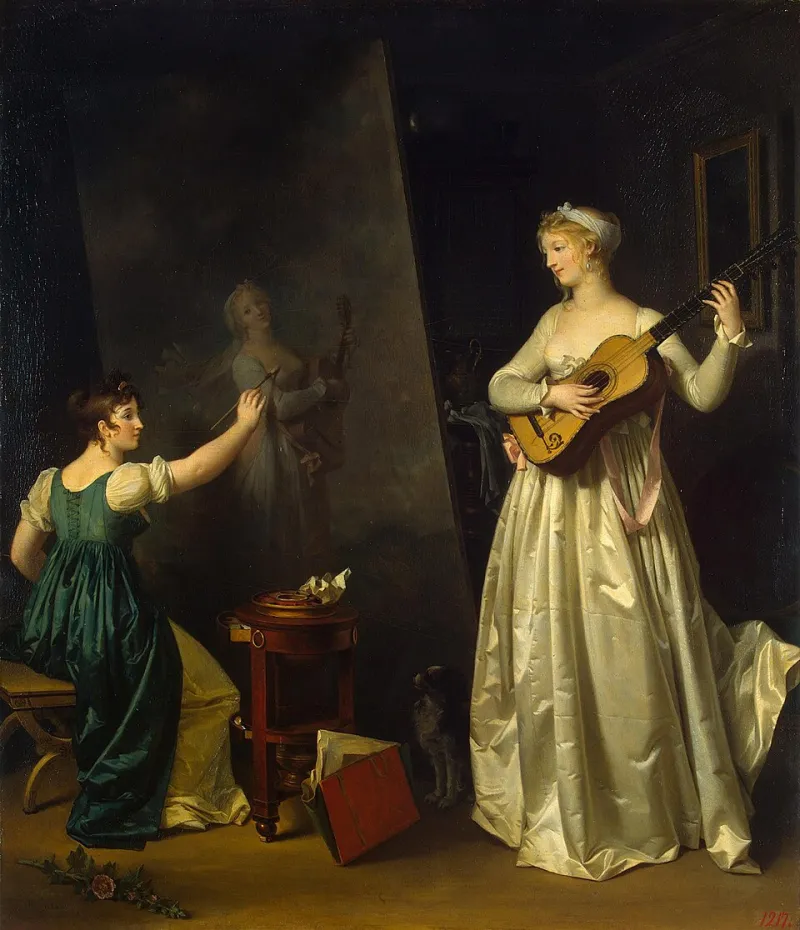
Photo: Marguerite Gérard, Public domain, via Wikimedia Commons
The pressure to post, perform, and pivot to whatever's trending is real — and Austin's independent art community is increasingly pushing back. We talked to artists who've made a deliberate choice to build something that outlasts the algorithm, and what they had to say might change how you think about your own creative practice.
Let's be honest about something: the algorithm doesn't care about your artistic vision. It cares about engagement. It cares about watch time and saves and shares. It rewards the person who figured out that a certain color palette gets more clicks this month, or that posting a timelapse of your process on a Thursday afternoon will outperform anything you put up on a Sunday.
None of that has anything to do with making good art.
Austin has always had a complicated relationship with trend-chasing. It's a city that built its cultural identity on a slogan — "Keep Austin Weird" — that was, at its core, a rejection of homogenization. And right now, a growing number of artists working in and around the city are applying that same instinct to their digital presence, choosing to opt out of the performance loop in favor of something slower, more deliberate, and ultimately more durable.
The Trap Nobody Talks About
Here's how it usually starts: you get a piece of content that does really well. Maybe it's a reel of your painting process, or a photo of a finished piece that catches the light just right. The numbers go up. You get new followers. A few commissions roll in.
So you try to recreate it. You study what worked. You start making decisions — consciously or not — based on what you think the audience wants to see rather than what you actually feel compelled to make. And somewhere in that process, something quiet but important starts to erode.
"I spent about eight months trying to be the artist people seemed to want me to be based on what performed well," says one Austin-based painter who works primarily in large-scale abstracts. "By the end of it, I had a bigger following and I hated everything I was making. That's not a trade I'd make again."
This isn't an isolated experience. It's a pattern that shows up repeatedly when you talk to working artists about their relationship with social media — a slow drift from authentic creative expression toward content production, with the line between the two becoming increasingly blurry.
What "Authentic" Actually Means in Practice
Authenticity is one of those words that's been used so much it's started to lose meaning. So let's be specific about what Austin artists actually mean when they talk about staying true to their vision.
For some, it means refusing to work in styles or mediums that are trending if those styles don't reflect where they naturally want to go creatively. For others, it means being selective about which commissions they take — saying no to work that would require them to produce something outside their established aesthetic, even when the money is good.
For a lot of artists, it means accepting that their social media presence will be smaller, more niche, and less optimized than it could be — and deciding that's an acceptable trade-off for work that feels genuinely theirs.
"I have a very specific thing I do," says one illustrator whose client list includes editorial clients and licensing deals built almost entirely through word of mouth and a modest but deeply engaged online following. "It's not for everyone. But the people it is for? They find it. And they stay. That's worth more to me than a viral moment that brings in a thousand followers who don't actually connect with the work."
The Long Game Is an Actual Strategy
There's a tendency to frame the authenticity-versus-algorithm conversation as idealistic versus practical — like staying true to your vision is the noble but financially naive choice, while chasing trends is what serious professionals do.
But that framing doesn't hold up when you look at the artists in Austin who've built sustainable, long-term creative businesses. The ones with consistent commission pipelines, licensing deals, gallery relationships, and collector bases that grow year over year tend to have something in common: a recognizable, coherent body of work that people can point to and say, "That's their thing."
Distinctiveness is, it turns out, a business asset. In a market flooded with content, having a clear and consistent artistic identity is one of the most effective forms of differentiation available. Collectors and clients who are looking for something specific will find you — and they'll be more loyal, more willing to pay appropriate rates, and more likely to refer others precisely because they know exactly what you do and why they value it.
"Consistency isn't the same as being boring," says one Austin-based artist who works in mixed media and has been building her practice for over a decade. "My work has evolved a lot. But there's a thread running through all of it that people who've followed me for years can see. That thread is what makes it mine. You can't manufacture that thread. You have to actually follow it."
The Permission You Didn't Know You Needed
Something worth naming: a lot of artists already know they're drifting from their authentic practice. They feel it. The work starts to feel like a chore rather than a compulsion. The studio time gets harder to motivate. The finished pieces don't excite them the way they used to.
But there's a gap between recognizing the drift and actually doing something about it, because course-correcting means accepting a potential short-term cost — fewer posts, less optimized content, possibly slower follower growth — in exchange for a long-term gain that can feel abstract and hard to quantify.
Here's the thing, though: Austin's creative community has always given artists permission to be weird, specific, and unapologetically themselves. That's been the whole deal since before most of us got here. The artists who've shaped this city's identity — the ones whose work feels like Austin, whose names get mentioned in the same breath as the places and movements that define the scene — aren't the ones who figured out the algorithm. They're the ones who made work that couldn't have come from anywhere else.
That's the standard worth chasing. Not the trending audio, not the color palette that's performing well this quarter, not the content format that the platform is currently rewarding.
Make something that's undeniably, specifically, stubbornly yours. Austin has always had room for that. And the people who are looking for exactly what you make will find you.
They always do.