From First Purchase to Lifelong Patronage: How Austin Artists Are Cultivating Enduring Collector Bonds
In the contemporary art world, the transaction has long been treated as the destination. A piece is made, exhibited, purchased, and delivered — and the artist moves on to the next canvas. Yet a meaningful shift is underway in Austin's visual art community, where a generation of artists is reframing that moment of sale not as a conclusion, but as an invitation.
For these practitioners, the collector is not simply a buyer. They are a collaborator in the ongoing life of a work, a witness to an evolving creative practice, and — when the relationship is nurtured with intention — one of the most powerful advocates an artist can have.
The Moment After the Sale
The days and weeks following a first purchase represent a critical and frequently overlooked window of opportunity. Many artists who have built loyal collector bases speak of the importance of acknowledging that moment with genuine warmth rather than transactional formality.
A handwritten note, a small print of the acquired work, or even a brief personal message referencing what inspired the specific piece can distinguish an artist from the dozens of others whose work a collector may have encountered that same month. These gestures cost very little in material terms, yet they communicate something invaluable: that the artist sees the collector as a person, not a patron number.
For artists working within Austin's densely connected creative community, this kind of personal touch is also practical. Word travels quickly in a city that prizes authenticity, and collectors who feel genuinely valued are far more likely to return — and to bring others with them.
Studio Access as a Currency of Trust
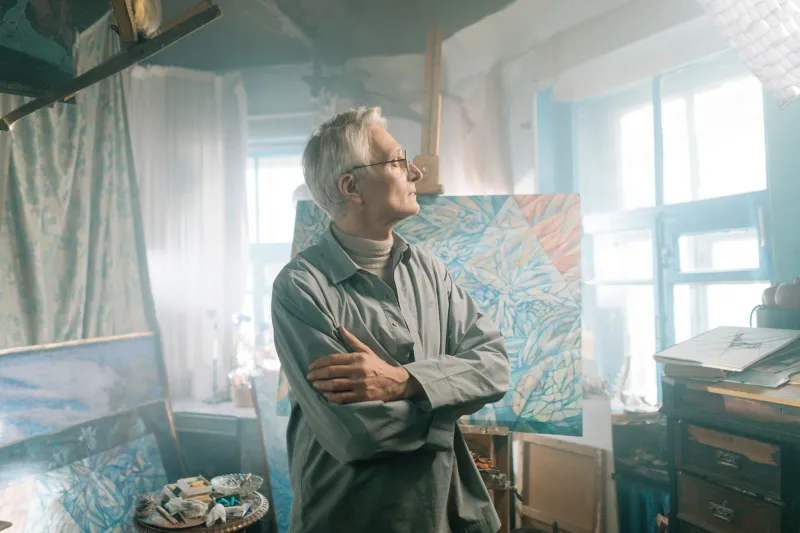
Among the strategies Austin artists employ to deepen collector relationships, few prove as effective as the private studio visit. Unlike the curated environment of a gallery opening, the studio offers collectors an unfiltered view of how work actually comes into being. The unfinished canvases stacked against the wall, the reference photographs pinned above a worktable, the layers of paint that were eventually painted over — these details tell a story that finished, framed work simply cannot.
Artists who regularly open their studios to established collectors describe a consistent outcome: visitors leave with a far richer understanding of the work they already own, and a heightened investment in what comes next. The work they purchased months ago acquires new meaning when they can place it within the context of a living, evolving practice.
Some artists formalize this access through small, curated events — an annual studio open house for existing collectors, for instance, held separately from any public-facing programming. The exclusivity matters. When collectors understand that this access is not available to everyone, it reinforces the sense that the relationship is genuinely reciprocal and valued.
Correspondence That Goes Beyond the Transaction
The most devoted collector relationships are rarely built on artwork alone. They are built on the steady accumulation of meaningful communication — updates that give collectors a sense of being present in the artist's journey even when months pass between purchases.
This might take the form of a quarterly letter or email that shares the thinking behind a current body of work, notes from a residency, or reflections on how the artist's perspective has shifted. It is not a marketing newsletter. It is correspondence — the kind that acknowledges the collector's investment not merely in financial terms, but in emotional and intellectual ones.
Austin artists who maintain this kind of ongoing dialogue with their collectors often find that it produces a particular kind of loyalty: collectors who follow the work through transitions in style or medium, who are willing to acquire pieces that represent new and sometimes unfamiliar directions, precisely because they feel connected to the reasoning behind those changes.
The Role of Shared Experience
Beyond the studio and the inbox, some Austin artists have found that shared experiences — attending a panel discussion together, visiting a museum exhibition that has influenced their practice, or participating in a small group conversation about a work in progress — create bonds that no amount of written communication can replicate.
These moments position the artist not as a producer of objects, but as a thinking, feeling participant in the broader cultural life that both artist and collector inhabit. They dissolve the transactional distance that formal gallery contexts can inadvertently reinforce, and they create the conditions for genuine friendship — a relationship in which collecting becomes an expression of personal connection rather than simply aesthetic preference.
For collectors, this kind of engagement can be transformative. Many describe a shift in how they relate to art broadly once they have experienced this level of access with even a single artist. They begin to see all art differently — with greater curiosity about process, greater patience with ambiguity, and greater willingness to invest in work that challenges them.
Collectors as Ambassadors
There is a practical dimension to all of this that Austin artists are increasingly willing to discuss openly. A collector who feels a genuine, ongoing connection to an artist's practice does not simply return to purchase again. They speak about the work at dinner parties. They recommend the artist to friends who are beginning to collect. They share studio visit photographs with their networks. They write thoughtful testimonials without being asked.
This kind of organic advocacy is, in many respects, the most valuable form of visibility an independent artist can achieve — more durable than a single press mention, more credible than paid promotion, and more likely to reach exactly the kind of audience the artist hopes to cultivate.
Building toward this outcome requires patience. It requires a willingness to invest time and attention in relationships that may not yield immediate returns. But for Austin artists who have committed to this approach, the compounding effect over years and decades is difficult to overstate.
A Practice Built on Relationship
What emerges from conversations with Austin artists who have built lasting collector communities is a shared conviction: that the work itself, however compelling, is not sufficient on its own to sustain the kind of devoted following that allows an artist to build a career on their own terms.
The work opens the door. The relationship is what keeps it open.
In a city as dynamic and relational as Austin — where creative communities overlap, where collectors and artists share neighborhoods, coffee shops, and civic institutions — this philosophy feels particularly native. It reflects the broader culture of a place that has always valued the personal over the purely professional, and the enduring over the expedient.
For artists who embrace it, the collector's journey does not end at the point of sale. It begins there.