Borderless: How Austin Artists Are Capturing Global Collectors From Their Own Studios

For decades, the conventional wisdom in the American art world held that serious recognition demanded serious geography. New York. Los Angeles. Perhaps Chicago. The idea that an artist working from a studio in East Austin could command the attention of a Berlin gallerist or a Singapore collector would have seemed, at best, optimistic. At worst, naïve.
That calculus has changed — and Austin's contemporary artists are among those rewriting it most decisively.
A new generation of Austin-based visual artists is demonstrating that global reach is no longer contingent on relocation. Through a combination of disciplined digital presence, strategic international art fair participation, and thoughtfully cultivated online communities, these artists are building collector bases that span continents. The city's creative identity — rooted in independence, experimentation, and a particular kind of self-possessed confidence — turns out to translate remarkably well across borders.
The Digital Studio as a Global Threshold
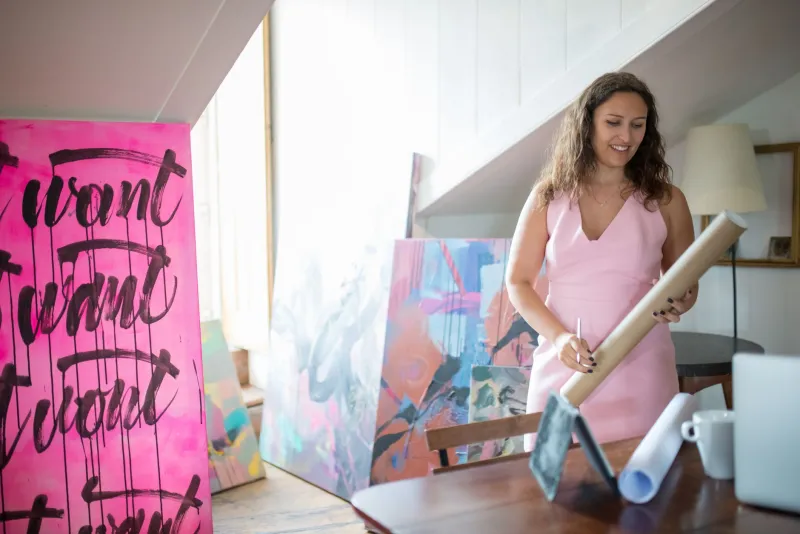
The virtual studio tour has emerged as one of the most powerful tools in a contemporary artist's international outreach arsenal. What began as a necessity during the disruptions of 2020 has matured into a sophisticated engagement strategy that Austin artists are deploying with increasing intentionality.
Rather than passive social media posting, the artists gaining traction internationally are treating their digital platforms as curated environments. They document not just finished works but the full arc of creation — material sourcing, compositional decisions, reworkings, and the physical textures of the studio itself. This transparency builds a kind of intimacy that transcends geographic distance, allowing a collector in Zurich or São Paulo to feel genuinely connected to the work's origins.
The specificity of place matters here, too. Austin's visual identity — its light, its landscape, its particular cultural layering of the American Southwest — gives work made here a legible distinctiveness. International collectors are not simply acquiring a painting or an installation; they are acquiring a perspective anchored in a city that carries its own compelling mythology.
International Art Fairs: Strategic Participation Without Full Immersion
Physical presence at international art fairs remains one of the most effective pathways to global collector relationships, and a number of Austin artists have found ways to participate without uprooting their practices or exhausting their finances.
Some have partnered with galleries in other cities — Houston, Dallas, New York — that maintain booths at fairs like Frieze, NADA, or Art Basel Miami Beach, allowing the artist's work to travel even when the artist cannot. Others have applied directly to artist-run booth programs or emerging artist sections, which carry lower financial barriers and often attract the kind of curator and institutional attention that accelerates international exposure.
The follow-through after these fair appearances is where Austin artists are distinguishing themselves. Rather than treating a fair as a singular event, the most strategically minded creatives use it as the opening of a sustained conversation — following up with international contacts, offering studio visits (virtual or in-person) to collectors who expressed interest, and maintaining correspondence that gradually deepens into genuine relationships.
Cross-Border Collaboration as Cultural Currency
Beyond individual promotion, some Austin artists are pursuing international visibility through collaborative projects with artists and institutions abroad. Artist residency exchanges, co-produced digital exhibitions, and joint print or publication projects with creatives in Mexico, Europe, and East Asia are creating networks of mutual visibility that benefit all participants.
These collaborations carry an authenticity that purely promotional outreach cannot replicate. When an Austin artist's work appears alongside that of a respected figure from another country's contemporary scene, it signals peer recognition rather than self-promotion — a distinction that sophisticated collectors and curators notice.
Austin's proximity to Mexico has proven particularly generative. Cultural exchange across the Texas-Mexico border has a long and rich history, and contemporary artists in Austin are drawing on that tradition to build genuine working relationships with artists and institutions in Mexico City, Monterrey, and Guadalajara. These connections have opened doors to Latin American collectors and exhibition venues that might otherwise have remained inaccessible.
Navigating Time Zones and Trust
Building international collector relationships from Austin is not without its friction. Time zone differences complicate real-time communication. Shipping costs and customs regulations add logistical complexity to sales. And the absence of an in-person meeting can slow the development of the kind of trust that significant art purchases require.
Austin artists who have successfully navigated these challenges tend to share a few characteristics. They communicate with exceptional consistency and professionalism. They invest in high-quality documentation of their work — photography, video, and written materials that allow a collector to evaluate a piece rigorously from a distance. And they are patient, understanding that an international collector relationship may take months or years to mature into a purchase.
Several Austin artists have also begun hosting in-person studio visits for international collectors who travel to the United States for other purposes — a trip to New York or Miami that includes a detour to Austin, made appealing by the city's broader cultural and culinary reputation. The studio visit, in this context, becomes both an art experience and a travel experience, adding a dimension of personal memory that deepens the collector's connection to the work.
Austin as a Point of Origin, Not a Limitation
Perhaps the most significant shift in perspective among Austin's internationally recognized artists is the reframing of geographic identity. Rather than treating their location as a disadvantage to be overcome, these artists are positioning Austin as a distinctive and desirable point of origin — a city with a creative culture that is neither derivative of New York nor reducible to regional cliché.
This confidence is not accidental. It reflects the maturation of Austin's contemporary art ecosystem over the past decade, as the city has developed genuine institutional infrastructure, a more sophisticated collector base, and a critical mass of serious working artists who support and challenge one another.
The global art world, for its part, has grown more genuinely curious about creative voices from outside the traditional centers. Collectors and curators who once defaulted to established art capitals are now actively seeking perspectives that carry the texture of different places and different lives.
Austin, it turns out, has a great deal to offer on that front. And its artists are increasingly prepared to make that case — to anyone in the world willing to look.