Beyond the Sale: How Austin Artists Are Turning Studio Visits Into a Business of Their Own
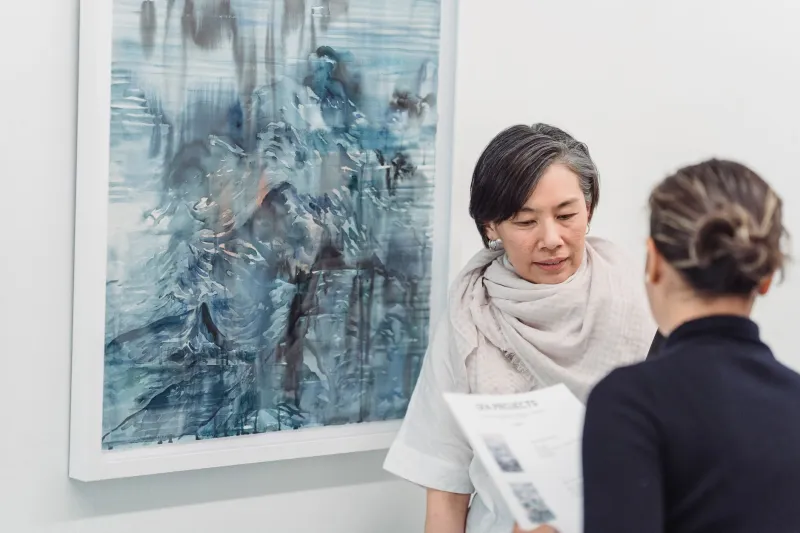
For most of art history, the studio visit existed as a courtship ritual. A collector would arrive, walk among unfinished canvases, accept a glass of something cold, and perhaps leave with a piece tucked under one arm. The visit itself was never the product. It was the prelude.
That arrangement is changing in Austin. Across the city's studios—from converted warehouses in East Austin to sun-filled live-work spaces near South Congress—artists are rethinking the economics of access. The studio visit, once a complimentary gesture extended to serious buyers, is becoming a billable experience. And collectors, it turns out, are willing to pay.
The Shift From Courtesy to Commodity
The logic behind charging for studio visits is not immediately obvious. Artists have traditionally worried that attaching a price to access might feel transactional in the wrong direction—as though they were selling their time rather than their work. But a number of Austin practitioners have found that the opposite is true. When a visit carries a fee, it signals that the experience has independent value. It reframes the artist not merely as a producer of objects but as a cultural figure worth engaging with directly.
This repositioning matters. Contemporary collectors, particularly those navigating a crowded art market, are increasingly drawn to experiences that feel rare and personal. A curated studio visit—one that includes a guided walkthrough of works in progress, a conversation about process and influence, and perhaps a look at archival materials—offers something no gallery opening can replicate: unmediated access to the mind behind the work.
Austin's creative community, always attentive to the intersection of culture and commerce, has been unusually quick to recognize this opening.
What Collectors Are Actually Paying For
It would be a mistake to reduce the appeal of a paid studio visit to simple curiosity. What draws collectors to these experiences is something more psychologically complex. There is, first, the pleasure of exclusivity. A curated visit offered to a small group—or conducted one-on-one—carries an inherent prestige that a public gallery event cannot. The collector is not one of many; they are among a chosen few.
There is also the question of narrative. Owning a work of art is, in part, an act of storytelling. Collectors acquire not just objects but the stories attached to them. A studio visit enriches that story considerably. When a collector can describe standing in the very space where a painting was made, hearing the artist explain the decisions embedded in each layer of paint, the work itself becomes more legible—and more meaningful.
Finally, there is the matter of trust. In a market where provenance and authenticity are increasingly scrutinized, direct contact with the artist functions as its own form of verification. The collector who has visited the studio, met the person, and understood the practice is unlikely to doubt what they eventually purchase.
Designing the Experience
Turning a working studio into an experience destination requires more deliberate thinking than simply opening the door. Austin artists who have built successful paid visit programs tend to approach the logistics with the same care they bring to their creative work.
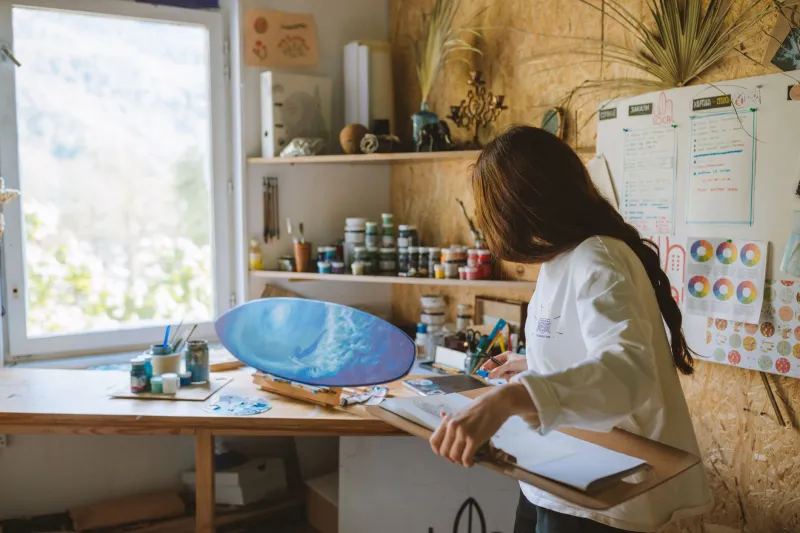
The physical environment matters enormously. A studio that feels genuinely inhabited—stacked canvases, jars of medium, the particular smell of oil and turpentine—communicates authenticity in a way that a staged or overly curated space cannot. At the same time, the visit must be navigable. Artists often create a loose but intentional arc: a beginning that introduces the practice broadly, a middle that moves through specific works or series, and an end that opens into conversation.
Timing is also a consideration. Visits that run too long risk exhausting the visitor; those that end too quickly leave the impression of a transaction rather than an encounter. Many Austin artists have settled on formats ranging from ninety minutes to two hours, with a natural pause built in for questions.
Some practitioners have introduced additional layers—printed materials, archival photographs, or small gifts such as prints or studio ephemera—that extend the experience beyond the visit itself. These gestures reinforce the sense that the collector is receiving something genuinely considered, not simply a tour.
Pricing and Positioning
Pricing a studio visit is one of the more delicate decisions an artist can make. Set the fee too low, and the experience risks feeling like a discounted sales pitch. Set it too high without sufficient substance, and the collector leaves feeling shortchanged.
Austin artists working in this space have adopted a range of approaches. Some offer tiered formats—a standard visit at one price point, a more intimate or extended experience at another. Others bundle visits with small works or signed editions, creating a package that feels complete in itself. A few have moved toward subscription-style models, offering regular access to collectors who wish to follow the evolution of a practice over time.
What unites the more successful programs is a clarity of positioning. Artists who frame their visits as cultural experiences—comparable, in a sense, to attending a lecture, a performance, or a private tour of an important collection—tend to encounter less resistance to pricing than those who present them as enhanced sales opportunities. The distinction is subtle but significant. One invites the collector into a world; the other asks them to audition for a purchase.
The Long View
It is worth noting that none of this necessarily replaces the sale. In practice, many Austin artists report that collectors who have paid for a studio visit are more likely to purchase work eventually—and to do so with greater confidence and commitment. The visit builds a relationship that the gallery transaction alone rarely achieves.
But the more interesting development is that the visit no longer needs to lead anywhere to justify itself. For artists who have built a following, who have developed a practice with genuine depth and communicable meaning, the experience of encountering that practice in person has value on its own terms.
Austin has always been a city that understands the economics of experience. Its music venues, its food culture, its festivals—all reflect a civic appetite for the live, the local, and the irreproducible. It is fitting that the city's visual artists are now applying that same logic to their own studios, and finding that collectors are ready to meet them there.