Seeing What the Artist Sees: How Austin Creators Are Turning Collectors Into True Believers
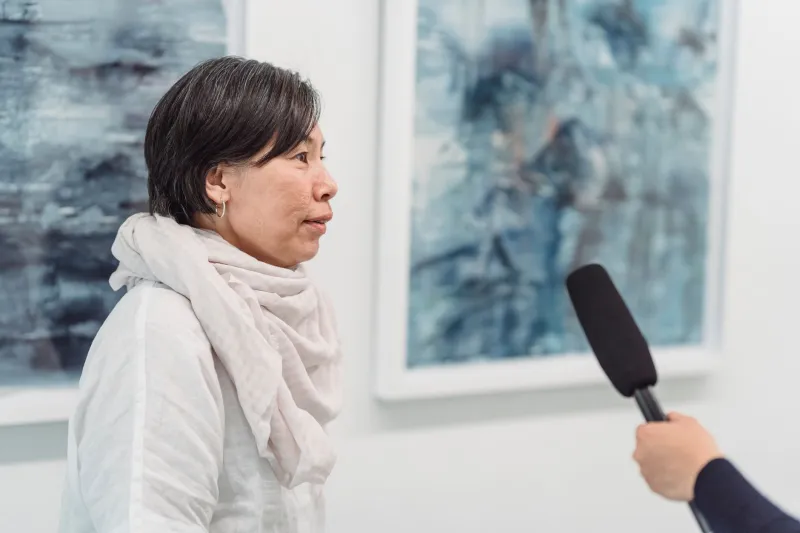
There is a particular moment that many Austin artists describe in near-identical terms. A collector stands before a finished work, checkbook figuratively in hand, and says something like: "I just love the colors." It is not a wrong response. It is simply an incomplete one. And for a growing cohort of contemporary artists working across this city, incompleteness has become an invitation.
Rather than accepting the surface read and moving on, these artists are pausing the transaction entirely. They are pulling up chairs, pouring coffee, and beginning a different kind of conversation—one that starts not with price but with process, not with aesthetics but with intent.
The Gap Between Admiration and Understanding
Contemporary visual art, by its very nature, operates on multiple registers simultaneously. A painting may function as a beautiful object while also encoding personal history, responding to a specific art-historical lineage, or making an argument about materiality that takes years of practice to articulate. For the uninitiated collector, that depth is frequently invisible.
Austin artists working in this space are candid about the challenge. The city has cultivated a remarkably enthusiastic collector base—one energized by the local creative scene, drawn to studios during events like East Austin Studio Tour, and genuinely motivated to support working artists. But enthusiasm and comprehension are not the same thing. The former can be sparked in an afternoon; the latter requires cultivation.
What has emerged in response is something that might generously be called an informal pedagogy of collecting. Artists are designing experiences—some structured, some spontaneous—that bring collectors into contact with the conceptual architecture underlying the work they admire.
Workshop as Entry Point
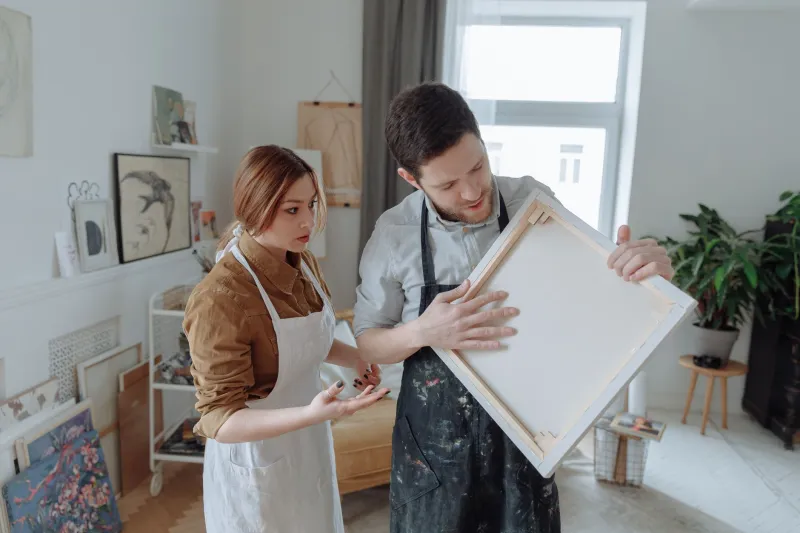
For some artists, the workshop format has proven to be the most accessible on-ramp. These are not classes in the traditional sense. Participants are not expected to pick up a brush or master a technique. Instead, they are guided through a kind of close reading of the work itself: What materials were chosen and why? What decisions were made and then reversed? Where does this piece sit within the artist's broader body of work?
The effect, as numerous artists report, is transformative. Collectors who arrive with a vague appreciation for a particular piece frequently leave with something closer to a framework—a vocabulary for discussing what they are responding to, and a curiosity about what they had previously overlooked. That curiosity, once awakened, tends to be self-sustaining.
Importantly, these workshops also create a sense of shared investment. When a collector understands that a particular texture was achieved through a months-long process of experimentation, or that a seemingly abstract form carries a specific biographical weight, their relationship to the object changes. It is no longer simply something they own. It is something they understand.
Studio Talks and the Power of Context
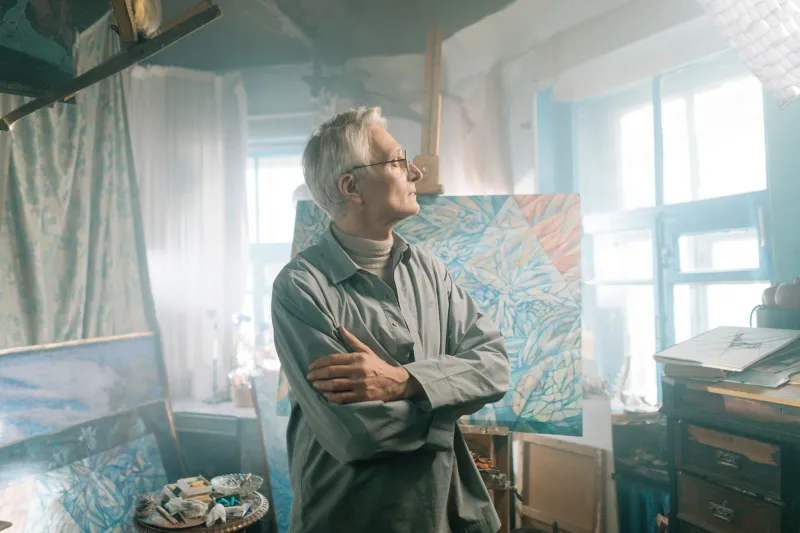
If workshops offer structured illumination, studio talks provide something more atmospheric: the experience of encountering work in the environment where it was made. Several Austin artists have made studio visits a deliberate part of their collector engagement, not as a sales exercise but as an act of contextual transparency.
Seeing a work surrounded by its source materials—the reference images pinned to a wall, the abandoned studies stacked in a corner, the tools still bearing traces of the process—communicates things that no artist statement can fully capture. Collectors are confronted with evidence of labor, of revision, of the sustained decision-making that separates a considered contemporary practice from a decorative impulse.
This transparency also has the effect of demystifying the artist without diminishing the work. Collectors come away with a clearer sense of what they are supporting when they make a purchase—not just an object, but an ongoing practice with its own internal logic and ambitions.
One-on-One Dialogue: The Slow Conversation
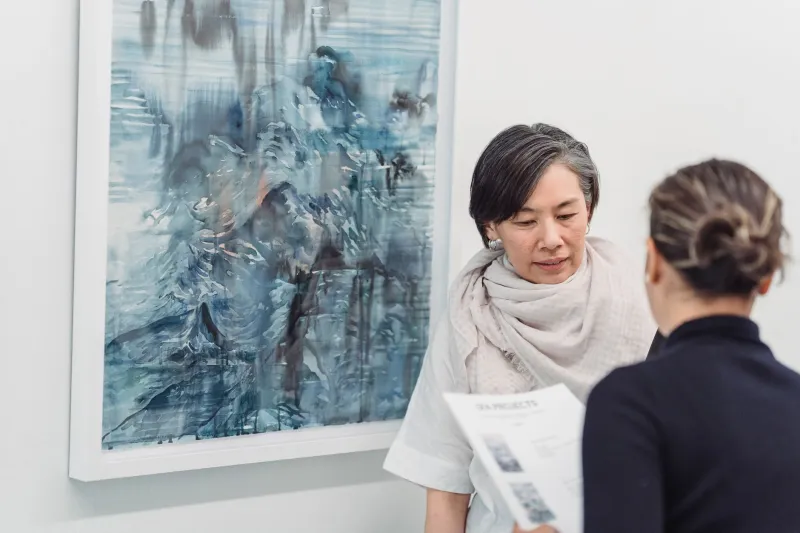
Perhaps the most potent educational tool available to Austin artists is also the simplest: sustained, unhurried conversation. A number of practitioners in the city have made it a point to remain in genuine dialogue with their collectors long after a sale has been completed—sharing updates on new directions, explaining how a recently acquired work connects to pieces created years earlier, or simply checking in when a body of work reaches a meaningful milestone.
This approach requires real commitment. It cannot be automated or outsourced. But the artists who practice it consistently describe a remarkable return: collectors who become not merely repeat buyers but informed advocates. People who speak about the work with authority at dinner parties, who recommend the artist to peers with genuine specificity, and who engage with new releases not as passive consumers but as participants in an unfolding creative narrative.
The distinction matters enormously in a city like Austin, where word-of-mouth still carries tremendous weight and where the collector community, while growing, remains meaningfully interconnected.
Redefining What Collecting Means
Underlying all of these efforts is a quiet but significant reframing of the collector's role. Traditionally, the art buyer has been positioned as an endpoint—the person at the conclusion of the creative process who exchanges money for object. What Austin artists are proposing, through their educational initiatives, is something more reciprocal.
A collector who understands the work becomes, in a meaningful sense, a steward of it. They make better decisions about how it is displayed, how it is discussed, and how it is preserved. They are more likely to lend works to exhibitions, to donate to institutions, and to champion the artist's career in ways that extend well beyond financial support.
This vision of collecting—as an informed, ongoing practice rather than a series of discrete transactions—is not new in the art world at large. But it has taken on a particular character in Austin, inflected by the city's emphasis on community, accessibility, and the close proximity between artists and the people who support them.
The Long View
What these Austin artists are building, piece by piece and conversation by conversation, is a collector culture that prizes depth alongside beauty. It is a culture in which the question "What does this mean?" is considered not an intrusion but an invitation—and in which artists are willing, even eager, to answer it.
The work of education is never fully finished. Each new collector brings fresh assumptions, a different visual vocabulary, a distinct set of prior experiences with art. But the artists who have committed to this process describe something that transcends any individual relationship: the gradual construction of an audience that sees not just what is in front of them, but what it took to put it there.