The Open Studio as Revenue: How Austin Artists Are Selling the Act of Making
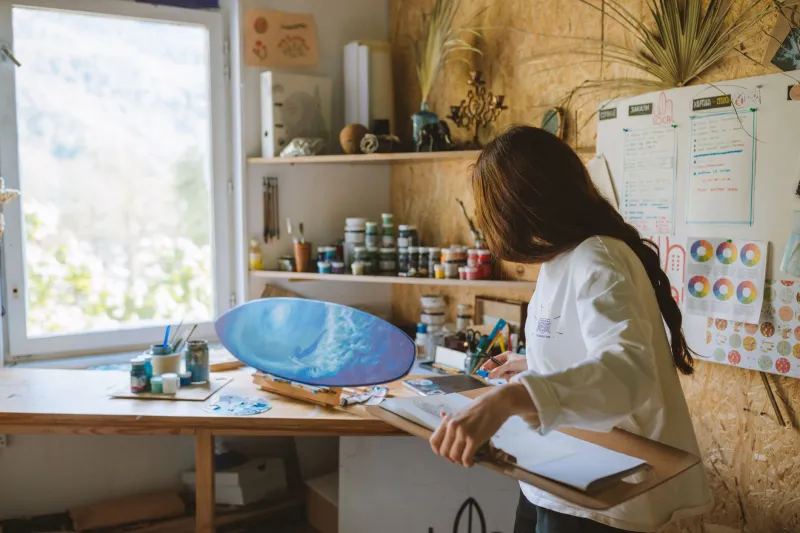
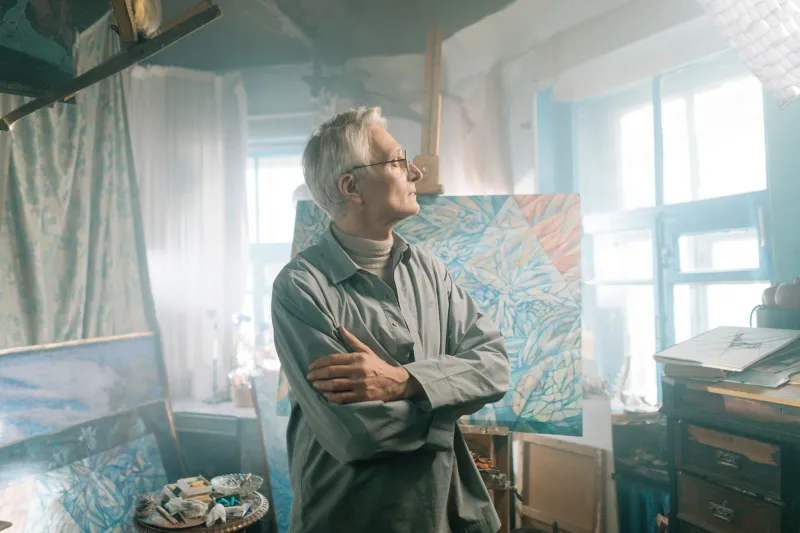
For most of art history, the studio was a private domain—a place of solitude, failure, and gradual discovery that the public encountered only in its aftermath, through the polished object displayed on a gallery wall. That boundary is dissolving in Austin, where a growing cohort of contemporary artists has recognized something counterintuitive: the process itself, unresolved and in motion, holds genuine commercial value.
What has emerged is less a trend than a structural reorientation of how artists think about their time and their work. The finished painting, sculpture, or installation remains the centerpiece of most portfolios, but for a notable number of Austin practitioners, it is no longer the only thing being sold.
Why Collectors Pay to Watch
To understand the economics of process-sharing, it helps to first understand the psychology driving demand. Collectors who invest in contemporary art are rarely purchasing decoration alone. They are purchasing a relationship with a specific creative intelligence—a particular way of seeing the world that they find compelling enough to bring into their homes and their lives.
When a collector watches an artist work through a compositional problem in real time, something more intimate occurs than when they encounter the resolved canvas at an opening. They become, in a meaningful sense, witnesses to the artwork's formation. That witness role carries emotional weight, and emotional weight, in the art market, translates to attachment.
Several Austin artists who have introduced paid studio access report that collectors who have observed the process are significantly more likely to purchase the resulting work—and to do so at higher price points. The experience of watching, it seems, deepens investment in the outcome.
Live Sessions and the Intimacy of the Unfinished
Live-streamed studio sessions have become one of the more accessible entry points into this model. Artists working across disciplines—painting, ceramics, mixed media, printmaking—have begun offering ticketed virtual access to working sessions, typically lasting between ninety minutes and three hours. These are not instructional classes in the traditional sense. The artist is not teaching technique; they are simply working, narrating their decisions, articulating their doubts, and allowing the audience to inhabit the studio alongside them.
The format rewards transparency. Artists who engage most successfully with this model tend to be those comfortable discussing the less linear aspects of their practice: the sessions where nothing resolves, the instincts that prove wrong, the works abandoned midway. Collectors respond to that honesty because it reframes the finished artwork as something genuinely earned rather than effortlessly produced.
Pricing for these sessions varies considerably. Some Austin artists offer open-access streams at modest entry points to build audience breadth, while others position intimate sessions—limited to ten or fifteen participants—as premium experiences with correspondingly higher fees. A small number have structured multi-session series around a single work, allowing a dedicated group of collectors to follow one piece from initial concept through final resolution.
Workshops That Blur the Line Between Observation and Participation
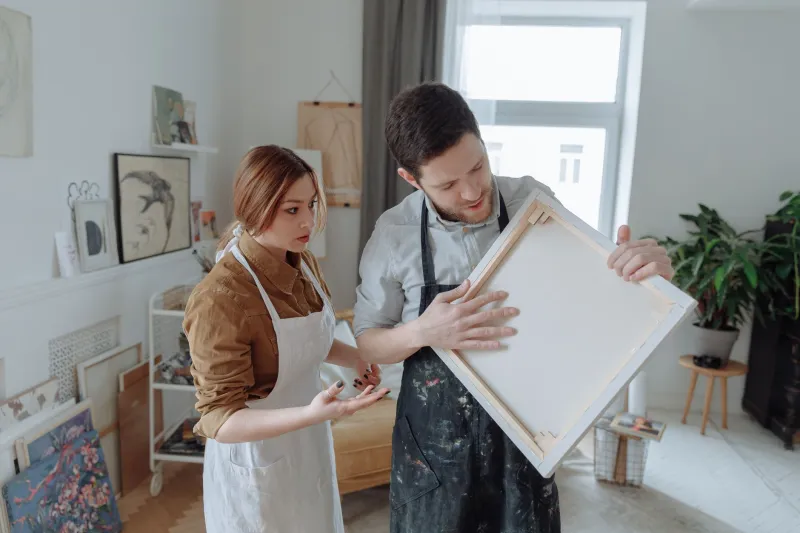
Beyond passive observation, some artists have developed hybrid workshop formats in which collectors move between watching and limited hands-on engagement. These events, typically hosted in the artist's own studio space, are deliberately positioned not as art classes but as immersive encounters with a working practice.
The distinction matters commercially and conceptually. Participants are not there to develop their own skills; they are there to better understand the artist's. The experience is curated around that artist's specific materials, methods, and visual concerns. Attendees leave with a richer vocabulary for discussing the work and, frequently, with a stronger impulse to acquire it.
Austin's studio infrastructure lends itself well to this format. Many artists working in the city occupy spaces large enough to accommodate small groups comfortably, and the city's broader culture of creative openness means that the proposition of an intimate studio gathering carries genuine appeal for the collector demographic that has grown alongside Austin's expanding arts scene.
Building a Subscription Architecture Around Daily Practice
For artists whose work unfolds slowly—those engaged in large-scale installations, extended research-based projects, or works that develop over months rather than weeks—the subscription model has proven particularly effective. Rather than offering discrete ticketed events, these artists have constructed ongoing access programs through which subscribers receive regular documentation of the work in progress: written reflections, photographic sequences, short video dispatches from the studio, and occasional live check-ins.
The appeal for collectors is the sense of continuous accompaniment. They are not parachuted into a finished world; they are present as the world takes shape. Several Austin artists operating this way report that their subscriber bases have become among their most reliable sources of annual income—predictable in a way that exhibition sales and commission work rarely are.
These programs also function as long-form marketing, though the artists who run them most effectively resist framing them in those terms. The value offered must be genuine and self-contained, not merely a promotional vehicle for eventual sales. Collectors are sophisticated enough to recognize the difference, and those who feel they are being led rather than genuinely invited will disengage.
The Question of Authenticity and Its Limits
Opening the studio to paying audiences is not without tension. Some artists express concern that the presence of observers—even attentive, respectful ones—fundamentally alters the nature of the making. The studio's value as a space for genuine risk-taking depends, in part, on its privacy. Work that is watched is work that is, to some degree, performed.
This is not a trivial objection, and the artists who engage most thoughtfully with the process-sharing model acknowledge it directly. The resolution, for most, lies in selectivity: not every session is open, not every phase of a work is shared, and the artist retains full authority over what the audience is permitted to see. The open studio, in this sense, is a curated openness—generous but not unconditional.
A New Chapter in the Artist-Collector Relationship
What the studio visit economy ultimately represents is a recalibration of where artistic value resides. For collectors, proximity to the creative act offers something the secondary market cannot replicate: a direct, personal relationship with the intelligence behind the work. For artists, it offers a revenue stream that does not require them to produce and sell more objects, but rather to share more of what they are already doing.
In Austin, where the contemporary art community has long valued directness and creative authenticity over institutional distance, this model finds particularly fertile ground. The artists pursuing it are not abandoning the traditions of their practice; they are extending those traditions into a new kind of relationship with the people who care about their work most.