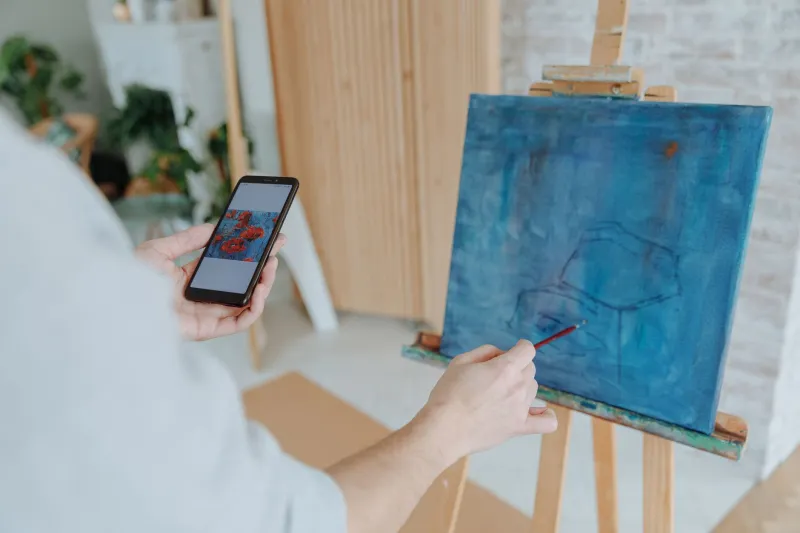
From the Ground Up: Austin Artists Reimagining Their Practice Through Sustainable Materials
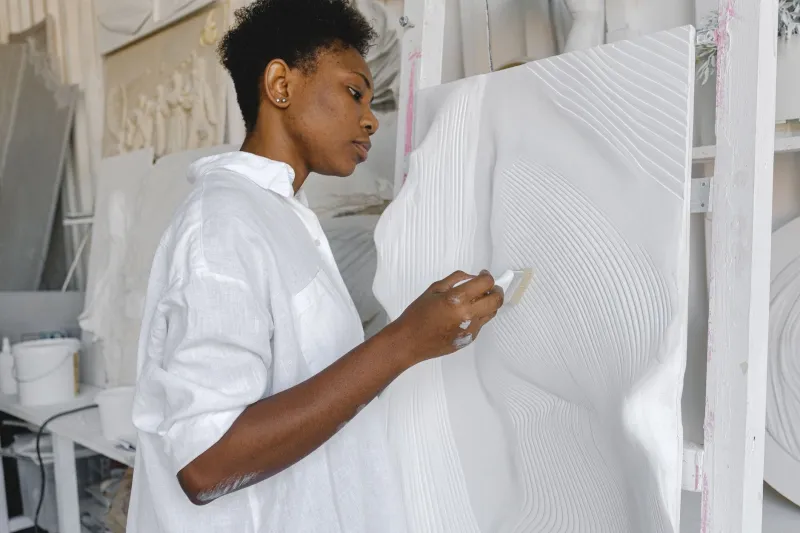
In the studios and workshops scattered across Austin's East Side and South Lamar corridor, a quiet but consequential shift is underway. Artists are opening their supply cabinets and asking harder questions — not just about what they are making, but about the environmental cost of making it. The result is an emerging body of work that is as much about process and material philosophy as it is about the finished object on the gallery wall.
Sustainability, once a concern largely confined to architecture and product design, has arrived in the visual arts. And in Austin — a city increasingly conscious of its environmental footprint even as it grapples with the ecological pressures of rapid growth — the conversation is gaining urgency.
The Material Question Artists Are Asking
For most of art history, the ethics of material sourcing occupied a distant corner of artistic consideration. Painters selected pigments for their visual properties; sculptors chose stone or metal for structural integrity; installation artists sourced whatever best served the conceptual framework of a given work. Environmental impact was rarely part of the equation.
That calculus is changing. A new generation of Austin practitioners — alongside some established artists who have revised their own thinking — is approaching material selection as a creative and ethical act in itself.
"I started thinking about where everything I use comes from, and I couldn't un-think it," explains one Austin-based mixed-media artist whose work incorporates reclaimed wood, salvaged industrial materials, and natural dyes derived from Central Texas plants. "Once you start pulling on that thread, it changes how you work. It changes what you make."
This kind of material reckoning is not simply aesthetic preference. It reflects a broader awareness of the art world's environmental footprint — from the toxicity of certain synthetic pigments and resins, to the carbon cost of shipping materials internationally, to the volume of non-biodegradable waste generated by studio practice.
Locally Sourced, Locally Rooted
One of the more compelling responses to these concerns among Austin artists is a turn toward hyper-local material sourcing. Rather than ordering supplies from national distributors, a number of practitioners have begun identifying raw materials within the region — a practice that simultaneously reduces environmental impact and deepens the geographic specificity of their work.
One sculptor working primarily in the Travis County area has spent the past two years developing a practice built almost entirely around materials gathered or salvaged within a fifty-mile radius of Austin. Limestone fragments, cedar offcuts from land-clearing operations, and reclaimed caliche — a sedimentary rock native to Central Texas — form the foundation of her large-scale installations.
"There's something philosophically honest about working with what the land here actually offers," she notes. "The work becomes genuinely of this place, not just made in this place. That distinction matters to me."
This localism also carries economic logic. Reduced shipping costs, lower material expenses, and the cultivation of relationships with local suppliers and salvage operations create a more resilient studio practice — one less vulnerable to the supply chain disruptions that have affected artists nationwide in recent years.
Tension Between Vision and Responsibility
It would be misleading to suggest that the transition to sustainable materials is seamless or without creative compromise. Many Austin artists who have committed to more environmentally conscious practices describe an ongoing negotiation between ecological responsibility and artistic vision — a tension that is generative in some respects and genuinely frustrating in others.
"There are colors I can't achieve with natural pigments. There are structural qualities I can only get from synthetic materials," acknowledges one painter who has spent three years attempting to rebuild her palette around sustainable alternatives. "I've had to let go of certain visual effects I loved. That's a real loss. But I've also discovered things I never would have found if I hadn't imposed those constraints on myself."
This experience — constraint as catalyst — surfaces repeatedly in conversations with Austin artists navigating the sustainability shift. The limitations imposed by restricted material choices often push practitioners toward unexpected formal solutions, unconventional processes, and a more intimate understanding of the materials themselves.
Recycled and Reclaimed: A Different Kind of Archive
For a distinct subset of Austin's contemporary artists, the commitment to sustainability has taken the form of working exclusively with recycled or reclaimed materials — a practice that carries its own conceptual richness. Objects that have already lived one life become the raw material for new meaning.
One East Austin-based installation artist has built a significant body of work from discarded consumer goods, salvaged architectural elements, and materials recovered from Austin's construction sites — a particularly abundant source in a city experiencing sustained development pressure.
"Every material I use has a history," he explains. "A piece of drywall from a demolished building on the east side carries information about that neighborhood, about what was there before. I'm not just recycling material — I'm working with memory."
This archival quality distinguishes reclaimed-material practice from mere thrift. When executed with intentionality, work made from salvaged objects can function as a form of cultural documentation — a record of a city in transformation, told through the objects it discards.
Institutional Recognition and Market Response
As sustainable practice gains visibility within Austin's art community, questions arise about how galleries, collectors, and institutions are responding. The picture is mixed but encouraging.
Some gallery directors report growing interest from collectors in the provenance and material ethics of the work they acquire — a shift that mirrors broader consumer awareness around sustainability in other industries. Others note that sustainable practice remains a secondary consideration for most buyers, who continue to prioritize aesthetic and investment value above all.
On the institutional side, several Austin arts organizations have begun incorporating environmental criteria into grant applications and residency programs — a modest but meaningful signal that sustainability is being taken seriously as a dimension of contemporary practice, not merely a marketing distinction.
Redefining Contemporary in Austin
What is perhaps most significant about Austin's sustainability shift is what it suggests about the evolving definition of contemporary art itself. For decades, "contemporary" has been understood primarily in temporal terms — work made now, reflecting the concerns of the present moment. What Austin's most ecologically engaged artists are proposing is that material ethics are inseparable from that contemporaneity.
To make art in 2024 without grappling with the environmental implications of that act is, in this view, to be less than fully present to the moment. The materials an artist chooses are not neutral. They carry weight — literal and otherwise — and the most rigorous practitioners are now accounting for that weight in their work.
In Austin, a city navigating its own complicated relationship with growth, development, and environmental stewardship, this conversation feels particularly urgent. The artists engaging with it most seriously are not simply making greener work. They are proposing a more honest way of making — and in doing so, expanding what it means to practice visual art in this city and this moment.