Strange Alchemy: The Austin Artists Transforming Unexpected Materials Into Conceptual Art
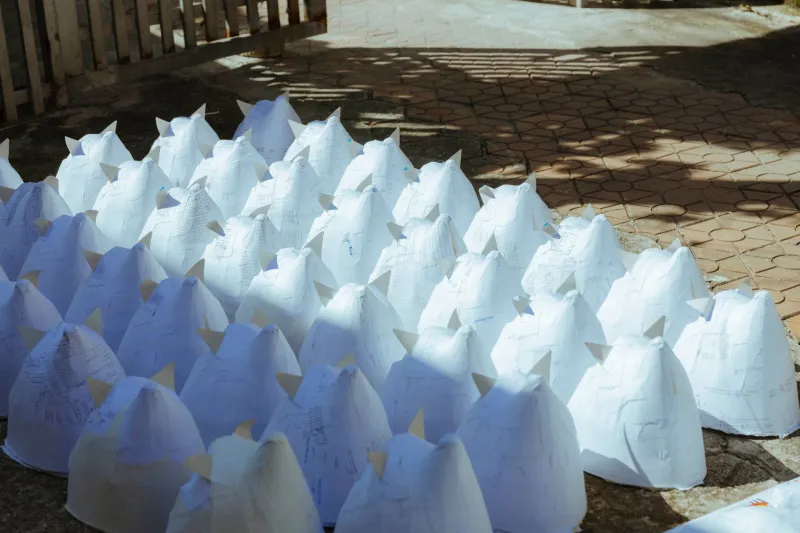
There is a particular kind of creative decision that announces itself immediately upon entering a room. It isn't the scale of the work, or its color, or even its subject matter. It is the material—the physical substance from which the piece has been constructed—that stops a viewer in their tracks and demands a reckoning. Why this? Why here? What does it mean that a work of art is made from something the world had already decided was finished?
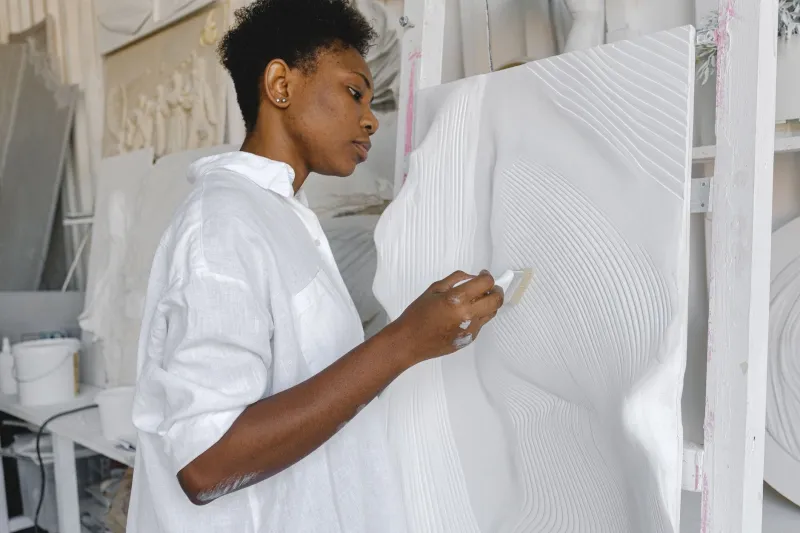
In Austin's contemporary art landscape, a compelling cluster of artists is asking exactly those questions. Their studios are stocked not with tubes of oil paint and stretched linen but with industrial salvage, discarded machinery, raw neon tubing, hand-dyed fiber, cast resin, and objects pulled from demolition sites across a city in perpetual transformation. What unites them is not a shared aesthetic or a common political agenda but a conviction that the material is never incidental—that what a work is made from shapes, at the most fundamental level, what a work is able to say.
The Vocabulary of the Discarded
For artists working with found and salvaged materials, the decision to incorporate an object into a work is rarely arbitrary. The object arrives already saturated with meaning—with the residue of its prior function, the wear patterns of its use, the social context of its origin. An artist working with industrial waste from Austin's construction boom is not simply making a formal choice about texture or color; they are entering into a dialogue with the city's economic history, its patterns of growth and displacement, its complicated relationship with its own past.
This distinction separates the most rigorous practitioners of material-based work from those who employ unconventional substances primarily for their visual novelty. The artists generating the most substantive conversation in Austin's contemporary scene are those for whom the material constitutes an argument—one that the work's composition, scale, and placement then proceed to develop.
Found steel, for instance, carries a very different conceptual charge than steel purchased new from a supplier. The former has already existed in the world, has already served a purpose, has already been deemed expendable. An artist who reclaims it and transforms it into something that commands aesthetic attention is making a claim about value—about what gets preserved and what gets discarded, and by whose determination.
Light as Medium, Space as Canvas
Not all unconventional materials are tangible in the conventional sense. Several Austin artists have built significant bodies of work around light itself—not as illumination for other objects, but as the primary sculptural element. Working with neon, LED arrays, fiber optics, and projected imagery, these practitioners treat luminescence with the same rigorous intentionality that a painter might bring to pigment selection.
The challenges are considerable. Light behaves differently across surfaces, times of day, and ambient conditions. A piece that achieves a precise effect in a darkened gallery may read entirely differently in a sun-drenched atrium or an outdoor installation context. Artists working in this medium describe a process of constant recalibration—a sensitivity to environmental variables that painting on a fixed support simply does not require.
What light-based work offers in return is an immediacy and an immersiveness that few other mediums can match. A viewer does not stand before a light installation in the way they might stand before a painting; they stand within it. The boundaries between object and observer dissolve in ways that generate a qualitatively different aesthetic experience—one that Austin's installation artists have been exploring with particular inventiveness in the city's warehouse spaces and adaptive-reuse venues.
Textile, Fiber, and the Politics of Craft
Elsewhere in Austin's studios, artists are reclaiming materials associated with domestic craft traditions—fiber, fabric, thread, and textile—and repositioning them within a fine art context that has historically undervalued such work. The move is not merely aesthetic; it carries a pointed critique of the hierarchies that have long separated what counts as high art from what gets dismissed as decorative or functional.
Artists working in fiber are navigating a rich and contested terrain. The materials themselves carry centuries of gendered labor history. They are soft where painting is taut, tactile where sculpture is often forbidding, warm where institutional art spaces tend toward the cool and the clinical. Introducing them into a contemporary gallery context creates a productive friction—a collision of expectations that the most skilled practitioners exploit with precision.
The scale at which some Austin fiber artists are now working amplifies that friction considerably. Large-format textile installations that consume entire gallery walls or cascade from ceiling to floor cannot be easily categorized as craft objects. They demand the same spatial engagement as monumental painting or large-scale sculpture, while retaining the material intimacy that distinguishes fiber from those more traditionally legitimized mediums.
Site-Specificity and the Transformative Encounter
For a number of Austin artists, the unconventional material of choice is the site itself—the specific architectural, historical, and social conditions of a particular location. Site-specific installation work treats place not as a neutral backdrop but as an active participant in the work's meaning. The piece cannot be moved without being fundamentally altered, because the place is part of its substance.
Austin offers unusually rich material in this regard. The city's rapid growth has produced a landscape of stark contrasts—gleaming new construction adjacent to weathered vernacular architecture, tech campuses butting up against neighborhoods with deep working-class and immigrant histories. Artists who engage these contrasts directly, who make work that could only exist in this specific location at this specific moment, are producing some of the most urgently relevant art currently being made in Central Texas.
The transience inherent in much site-specific work introduces another dimension entirely. A piece installed in a building slated for demolition is not merely responding to its context; it is participating in that context's disappearance. Documentation becomes a curatorial act. The photograph or video record of the work is not simply a representation of it—it is, in many cases, the only form in which the work will continue to exist.
Why the Material Matters
The artists working at Austin's material frontier are not united by a manifesto or a movement. They are united by a shared refusal to treat medium as a neutral container for content—by the conviction that the physical substance of a work is itself a form of language, capable of speaking things that image and composition alone cannot articulate.
That conviction has produced some of the most formally adventurous and conceptually ambitious work currently emerging from Austin's contemporary art community. It has also produced work that challenges collectors and institutions to expand their definitions of what art can be made from and, by extension, what art can mean.
In a city that has always prized originality and resisted easy categorization, these artists feel entirely at home—even when, or perhaps especially when, the materials they are working with are anything but conventional.