Roots Over Filters: How Leaning Into Austin's Visual DNA Builds a Brand That Actually Sticks
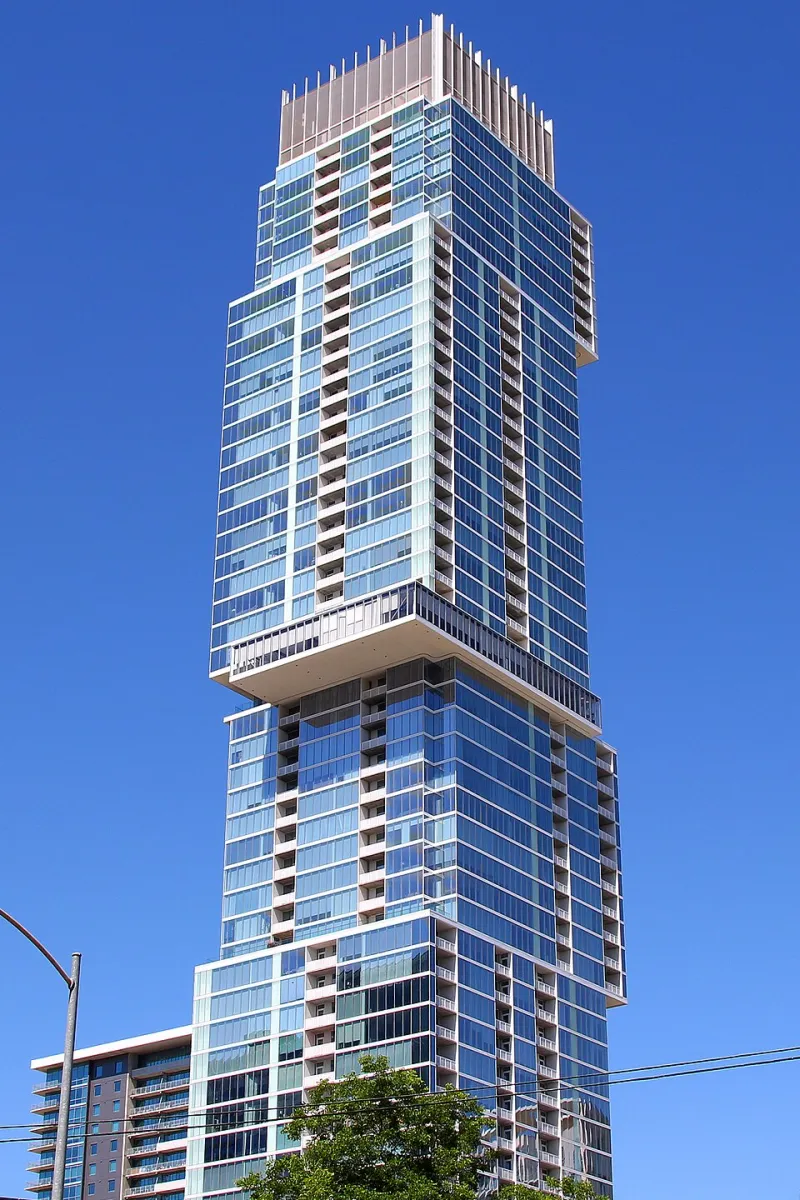
Photo: Larry D. Moore, CC BY 4.0, via Wikimedia Commons
Scroll through enough art accounts and you start to notice something unsettling: everything looks the same. The same muted tones, the same minimalist layouts, the same trending color story that apparently every creator on the planet discovered at the exact same moment. It's polished. It's cohesive. And it is absolutely forgettable.
Meanwhile, some of the most recognizable artists working in Austin right now couldn't tell you the last time they thought about their Instagram aesthetic. What they can tell you is what the light looks like bouncing off the Colorado River at 6 p.m., or how the layered text on a South Congress mural shifts meaning depending on where you're standing. That specificity—that deeply local, deeply personal visual vocabulary—is where real brand identity lives.
Austin Isn't a Backdrop. It's a Collaborator.
There's a reason people talk about Austin's creative scene the way they talk about cities like New Orleans or Nashville. It's not just the volume of artists here—it's the texture of the place itself. The turquoise and terracotta of the Hill Country. The hand-painted signage outside a dive bar on Sixth Street. The geometric shadows that fall across the Barton Springs pool deck on a Tuesday afternoon when half the city has collectively decided to skip work.
This stuff gets into your work whether you invite it or not. The question is whether you're going to lean into it intentionally or keep chasing whatever visual trend just landed on your For You page.
Local painter and muralist Delia Cortez, who splits her time between studio work and large-scale commissions around East Austin, puts it simply: "I stopped trying to make work that looked like what I was seeing online. When I started painting the colors I actually see outside my front door, everything clicked. Clients started recognizing my work before they saw my name on it."
That's the goal, right? Work that has a signature before the signature.
What "Visual Voice" Actually Means (And Why It's Not About Drawing Style)
A lot of artists hear "develop your visual voice" and immediately think it means picking a medium or a subject matter. Portraits. Landscapes. Abstract. Figurative. And sure, consistency in subject matter helps. But visual voice goes deeper than that.
It's the emotional temperature of your work. It's what your pieces feel like before the viewer even consciously processes what they're looking at. Think about the difference between walking into a Tex-Mex spot in Austin versus a chain restaurant in an airport. Both are technically serving food. But one has a sense of place, a history, a vibe that you absorb through your pores. The other is just fuel.
Your art can be either of those things. The goal, obviously, is to be the Tex-Mex spot.
For Austin-based illustrator Marcus Webb, the turning point came when he stopped trying to develop a "style" in the abstract and started paying attention to the specific things that made him stop and stare. "I'm obsessed with live music venues—not the stages, but the edges. The sticky floors, the torn posters, the way the neon from outside bleeds in through a cracked door. I started drawing those details compulsively, and suddenly I had a style without even trying to have one."
The Oversaturation Problem (And Why Local Identity Is the Solution)
Here's the market reality: there are more working artists, illustrators, and designers competing for attention right now than at any point in human history. The barrier to entry for sharing work is essentially zero. That's mostly a good thing, but it does mean that generic competence is worth less than it used to be.
What cuts through the noise isn't being better at the craft—it's being more specifically yourself. And for Austin creatives, "yourself" comes pre-loaded with one of the most distinctive regional identities in the country.
The live music culture here isn't just a fun fact about your city. It's a rhythm. A pace. An understanding of how performance and spontaneity coexist with technical discipline. The mural culture on the East Side isn't just pretty—it's a conversation between generations of artists about what public space is for. The landscape itself, that particular collision of desert and green, heat and water, is a visual argument that shows up in local work in ways that people from other places immediately recognize as distinctly Austinite.
Leaning into those influences isn't limiting your market. It's differentiating yourself within that market.
Practical Ways to Excavate Your Austin Influence
This doesn't have to be some grand philosophical exercise. Here are a few concrete ways to start pulling your environment into your work more intentionally:
Keep a visual journal, not a mood board. Mood boards are full of other people's work. A visual journal is full of things you noticed—a crack in a sidewalk, a color combination on a storefront, a shadow that hit weird. Start documenting what catches your eye in the wild.
Pay attention to what you keep returning to. If you've walked past the same mural on Cesar Chavez twelve times and photographed it every time, that's information. Something in that work is speaking to something in yours.
Let Austin's contradictions into your work. This city is famously full of tension—old and new, corporate and indie, Texas conservative and progressive enclave. That friction is creatively rich. Don't smooth it over.
Study the light here specifically. Austin's light in summer is brutal and flat. In October it goes golden in a way that makes everything look like a memory. These are specific atmospheric qualities that can become signature elements of your visual language.
Brand Recognition Is a Long Game
Building a visual identity rooted in place and personal experience isn't a quick fix. It doesn't go viral overnight. But it compounds in a way that filter-chasing never does.
When people start to recognize your work before they see your name, when collectors seek you out specifically because they want your perspective on something, when a potential commission client says "I found you because your work feels like Austin"—that's the payoff. And it's not something an algorithm can replicate or a trend can replace.
The filter is temporary. The roots are permanent. Build from the roots.