Where Austin's Artists Gather: The Communities and Spaces Quietly Shaping Contemporary Practice
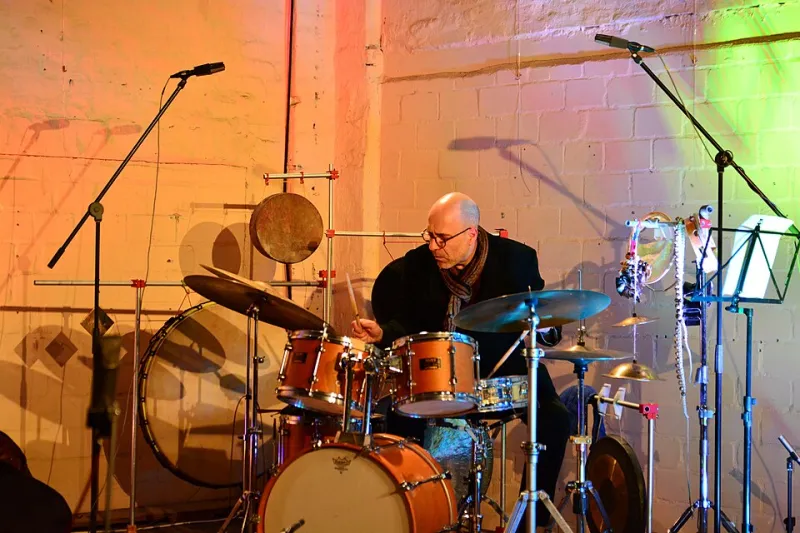
Photo: Frank Schwichtenberg, CC BY-SA 3.0, via Wikimedia Commons
There is a version of Austin's art scene that exists in press releases and exhibition announcements — polished, curated, and presented for public consumption. Then there is the version that unfolds in crowded shared studios on a Tuesday afternoon, in the back rooms of East Austin coffee shops, and in the group chats that buzz late into the evening with references, critiques, and half-formed ideas. That second version is where the real work happens.
Austin has long cultivated a reputation for creative independence, but what sustains that independence is rarely a solitary act. The city's most innovative contemporary artists are, almost without exception, deeply embedded in communities — physical, digital, and social — that shape their thinking as profoundly as any formal education or institutional affiliation. Understanding those communities means understanding Austin's art scene at its roots.
The Architecture of Shared Space
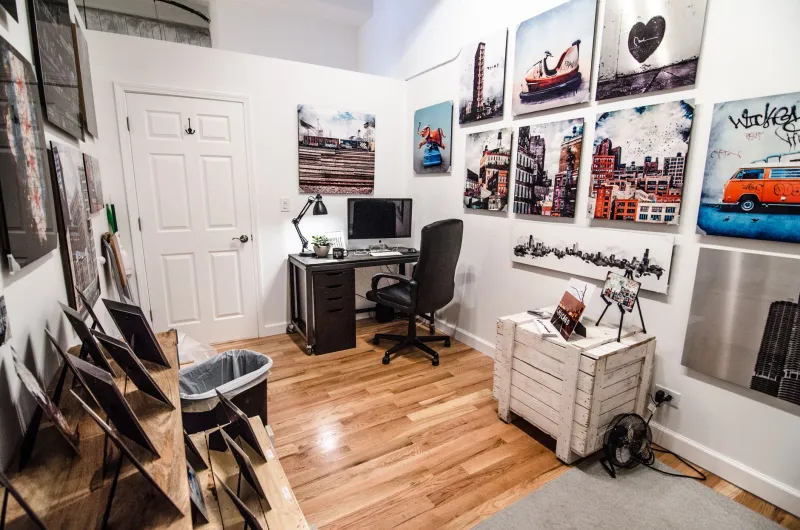
For many Austin artists, the studio collective is not simply a practical solution to the city's increasingly prohibitive real estate market. It is a deliberate philosophical choice. Shared studio environments create conditions that isolated practice cannot replicate: the ambient awareness of other people's processes, the casual exchange of technique and material knowledge, and the low-stakes accountability that comes from working alongside peers.
Several such spaces have become quietly central to the city's contemporary art ecosystem. East Austin, long a magnet for working artists before its rapid gentrification, still hosts a number of multi-artist studio buildings where painters, sculptors, textile artists, and installation practitioners operate in close proximity. The cross-pollination that results is not always intentional — sometimes it is as simple as noticing how a neighbor approaches a problem of scale, or borrowing a tool and staying for a two-hour conversation about conceptual framing.
What distinguishes Austin's most influential shared spaces from mere real estate arrangements is the presence of an implicit curatorial intelligence. The strongest collectives are not random assemblages of artists who happen to share a building. They are communities with a shared sensibility — not uniformity of style, but a common set of questions about what contemporary practice should be doing and why.
Informal Networks and the Circulation of Ideas
Not all of Austin's most generative artist communities are organized around physical infrastructure. Some of the city's most significant creative relationships have formed through recurring social rituals: the monthly critique group that has met for years without a formal name or institutional affiliation, the open-studio tradition that transforms private workspaces into temporary public forums, the artist-run dinner series that pairs conversation with food and, occasionally, works in progress.
These informal networks operate on a different logic than institutional programming. They are self-selecting, iterative, and governed by trust rather than policy. An artist who participates in a long-running peer critique group develops a kind of shorthand with fellow participants that accelerates intellectual exchange in ways that more formal settings rarely allow. Ideas circulate faster. Criticism lands differently when it comes from someone who has watched your practice evolve over years rather than encountered it for the first time at an opening.
Austin's geography has historically supported this kind of informal density. The relative compactness of the city's creative neighborhoods — East Austin, South Congress, the area surrounding the University of Texas — means that artists encounter one another with a frequency that larger, more dispersed cities cannot sustain. A chance meeting at a materials supplier or a shared table at a neighborhood restaurant can initiate a creative dialogue that reshapes both participants' work.
Digital Adjacency and the Extended Community
The past several years have added a significant new dimension to Austin's artist community landscape. Digital platforms — from group chats and shared online archives to more structured virtual critique spaces — have extended the reach of local networks without fully replacing their physical counterparts. Artists who have relocated away from Austin, or who have never lived there at all, now participate meaningfully in conversations that once required physical presence.
This digital adjacency has complicated, in productive ways, the question of what it means to be part of Austin's art scene. The city's creative identity is no longer strictly bounded by geography. An Austin-based artist might be in daily dialogue with practitioners in Los Angeles, New York, or internationally, while simultaneously maintaining the dense local relationships that ground their work in a specific place and community. The result is a creative ecosystem that is simultaneously local and networked — rooted in Austin's particular culture and landscape while remaining in constant conversation with broader contemporary practice.
The Role of Anchor Figures
Within any creative community, certain individuals function as connective tissue — not necessarily the most publicly prominent artists, but those whose generosity, curiosity, and social intelligence draw others into relationship. Austin's artist communities have their own version of these anchor figures: practitioners who organize gatherings, make introductions, share resources, and maintain the social infrastructure that allows creative exchange to flourish.
These individuals rarely receive institutional recognition for this work, which is largely invisible to the public. But their influence on the scene is substantial. The artist who has hosted a monthly open studio for a decade, welcoming emerging practitioners alongside established peers, has shaped more careers than many formal mentorship programs. The painter who maintains a rigorous critique group and insists on intellectual honesty within it has contributed to the development of a critical culture that elevates the work of everyone who participates.
Recognizing this labor — and the communities it sustains — is part of understanding Austin's contemporary art scene with any real accuracy.
What These Communities Produce
The output of Austin's artist communities is not easily quantified. It does not appear directly in exhibition records or sales figures. But its effects are legible in the work itself — in the formal risks that artists take when they feel supported by a community of peers, in the conceptual ambition that emerges from sustained intellectual dialogue, in the willingness to pursue unfamiliar materials or methods when someone nearby has already done the experimental groundwork.
Austin's most compelling contemporary practice does not emerge from isolation. It emerges from the specific texture of these communities: their arguments and enthusiasms, their shared references and points of contention, their capacity to hold individual artists accountable to the highest version of their own intentions.
The city's art scene, at its most vital, is a collective achievement — built in shared studios, sustained through informal networks, and animated by the ongoing exchange of ideas among people who have chosen, deliberately, to make their creative lives in proximity to one another.