After the Room Is Gone: How Austin Installation Artists Make Documentation Part of the Work
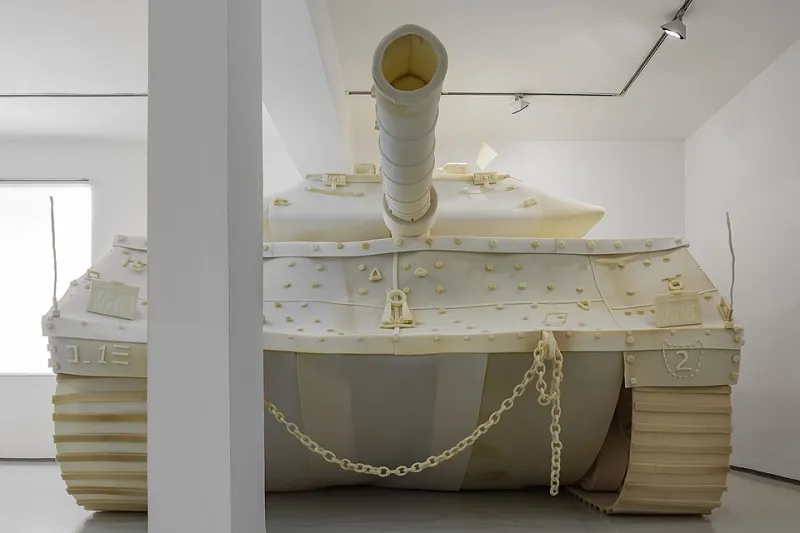
Photo: Dina Shenhav, CC BY-SA 4.0, via Wikimedia Commons
Installation art has always had a problem with afterlife. A painter can hang a canvas; a sculptor can store a maquette. An installation often exists for a room, a week, or a single opening, and then it is gone. What remains is a set of files: photographs, video, a checklist, a floor plan, maybe a paragraph of intent. In Austin, installation artists are beginning to treat those files not as leftovers but as part of the work.
The Ephemeral Problem
The problem is practical before it is philosophical. Curators need images to consider a project. Grant panels need documentation to assess a proposal or a completed work. Collectors who acquire ephemeral or reinstallable works need a record that explains what they own. Even peers need enough information to understand what happened in the room. Without documentation, an installation can be remembered as a rumor.
That has changed as Austin's installation community has matured. Artists who once relied on a friend's phone photographs now budget for documentation. They write install guides. They shoot video walkthroughs. They keep material samples and lighting notes. The result is a more professional record, but also a different relationship to the work itself. Documentation is no longer what happens after the art is over. It is one of the forms the art takes.
The Photographer as Collaborator
A good installation photograph is not a neutral window. It is an interpretation. Austin artists describe the difference between a photographer who documents events and one who understands spatial work. The former may capture the opening crowd; the latter knows how to show scale, sequence, and the relationship between objects and architecture.
That means a shot list, not a snap decision. Artists are increasingly briefing photographers on the conceptual stakes: which sightline matters, whether the room should feel empty or occupied, where the light is part of the piece, and which details carry the argument. Wide shots establish the whole. Medium shots show relationships. Details register material and surface. A human figure can provide scale, but it can also distract from the work's intended solitude.
Video adds another layer. A slow walkthrough can convey duration, sound, and the choreography of moving through a space. It can also expose flaws that a still image hides. The artists who use video well tend to think of it as a separate translation, not a superior record.
The Install Guide as a Living Document
Perhaps the most overlooked form of documentation is the install guide. For work that can be rebuilt, the guide is the difference between a sculpture and a set of instructions. It may include dimensions, hardware, power requirements, lighting specifications, packing notes, and a sequence for assembly. It may also include tolerances: what can change, what must not.
Austin artists who create reinstallable work are learning to write these guides for multiple audiences. A curator needs clarity under deadline. A collector needs assurance that the work can be cared for. A fabricator needs specifications. A grant panel needs to understand feasibility. The best guides are not bureaucratic. They are an extension of the work's logic, written in plain language and updated after each installation.
The Written Record
Text does more than caption an image. It can preserve the conditions of a project: what was promised, what was compromised, what was contingent on the room. Artists are increasingly keeping project diaries, correspondence with curators, and after-action notes. These materials may never be published, but they inform future proposals and help institutions understand what a work requires.
For grant applications, this written record can be decisive. A panel may see dozens of strong images. The artist who can explain how the work was made, how it was installed, and what it meant to the site is easier to trust. In Austin, where institutional budgets are modest and spaces turn over quickly, that trust matters.
What Gets Lost
Documentation is not the work. A photograph flattens spatial relationships. A video fixes a viewer's path. A written guide can make a provisional project sound more stable than it was. Artists who care about this tension often include multiple records and resist the idea of a definitive image. They may show installation views alongside process shots, or pair a polished video with a rougher phone record.
What gets kept is often what someone thought to capture. That is why documentation is an editorial act. The artist decides which angle represents the work, which sound is included, which detail is omitted. Those decisions shape how the work will be understood by anyone who never stood in the room.
A Practice of Translation
For Austin installation artists, documentation has become a professional discipline and a creative one. It connects the studio to curators, collectors, and funders. It allows ephemeral work to enter conversations it would otherwise miss. It also raises a question every artist must answer: if this work survives only as a record, what kind of record does it deserve?
The answer is not more images. It is better translation. The artists doing this well are not trying to make documentation replace the experience. They are trying to give the experience a second life—one that is honest about what was there, what is gone, and what can be rebuilt.